
Three days isn’t enough to see everything Mexico City has to offer — but it’s enough to get a taste of what makes this city so special.
We spent three full days exploring the city, from sunrise walks in Condesa to tacos on the street, Coyoacán, Lucha Libre and Chapultepec Castle. Some places completely surprised us. Others didn’t quite live up to the hype.
So here’s our 3-day Mexico City itinerary: exactly what we did, what we think is worth your time and money, what we’d skip, and what we’d do differently if we were visiting Mexico City for the first time again.
Some links on Worthwhile Guides are affiliate links. This means we may earn a small commission if you book through them, at no extra cost to you. We only share places and experiences we genuinely believe may be useful to our readers.
🗓 Duration: 3 full days
📅 Travelled: March 2026
🚶 Style: Walking + Uber
🌮 Best for: Food lovers, first-time visitors & culture
💰 Our spend: Around €200 per person, excluding flights
🏨 Where we stayed: Condesa
3-Day Mexico City Itinerary: What’s Inside
- Mexico City travel tips
- Where to stay in Mexico City: Condesa
- Day 1: Condesa, Historic Centre & Lucha Libre
- Day 2: Coyoacán, Frida Kahlo & tacos
- Day 3: Chapultepec, Hop-On Hop-Off & Polanco
- What we’d do differently
- How much we spent in Mexico City
- Our Worthwhile Verdict
Before You Go: Mexico City Travel Tips
Here are a few Mexico City travel tips we wish we’d known before our trip.
💵 Carry some cash
We recommend carrying around €20 per person in cash. Most of the small taco stands we visited didn’t accept cards, and some of our best meals were at exactly these kinds of places.
💳 We used Revolut
We used Revolut throughout the trip. It made paying by card easy and meant we didn’t have to worry about exchanging large amounts of cash.
🚗 Don’t underestimate Mexico City traffic
Mexico City is enormous, and traffic can be intense.
A journey that looks like it should take 15 minutes can easily take an hour during rush hour. We mainly used Uber because it was affordable, convenient and saved us time compared with public transport.
Our biggest advice: leave plenty of time when you’re heading to the airport. We’d allow around 45–60 minutes, depending on traffic.
And when you’re stuck in traffic, just accept it. Sit back, recharge and enjoy the break. You probably won’t be going anywhere quickly anyway.
📱 SIM card or eSIM?
We bought one physical SIM card at the airport for €30, which was enough for both of us.
We mainly needed it for Google Maps, and since our hotel had Wi-Fi, we didn’t feel the need to have mobile data on both phones.
If you prefer an eSIM, you can also use services such as Airalo or Holafly.
🏡 Stay in a safe, well-located neighbourhood
Where you stay can make a big difference in Mexico City. We’d recommend choosing a safe, residential neighbourhood that still has plenty of cafés, restaurants and things happening around you, rather than simply choosing the cheapest hotel or staying right next to the main attractions.
We stayed in Condesa and absolutely loved it. It felt safe, lively and easy to explore on foot, while still having a more residential feel.
Other neighbourhoods worth looking into include Roma Norte, Coyoacán and Polanco, depending on your budget and the kind of trip you’re looking for.
For us, a hotel doesn’t need to be luxurious. We prioritise somewhere clean, safe, affordable and well located — and Condesa was perfect for that.
🌮 Eat local
This is probably our biggest recommendation.
Eat the tacos from the street. Try the places filled with locals. Don’t be afraid of the little stands that don’t look particularly fancy.
One of our favourite rules became: if we saw locals — especially police officers — eating somewhere, we knew it was probably good.
And yes, we ate tacos at 10am. We never say no to tacos.
🎟️ Book Frida Kahlo in advance
The only attraction we think is worth organising several weeks ahead is the Frida Kahlo Museum, if you want to visit it.
We chose not to go, but more on that below.
🛡️ Is Mexico City safe?
We never had a moment during our trip when we felt unsafe.
We stayed in Condesa, used common sense and were comfortable walking around with our phones and cameras.
Mexico has a reputation for being dangerous because of the image of cartels and crime often portrayed in films and the media. But Mexico City is so much more than that.
Of course, like in any large city or capital, you need to be careful. In crowded places and on public transport, keep an eye on your belongings. If you’re walking at night, especially alone, and you come across a quiet, poorly lit street, it’s probably better to take another route.
But those same principles apply in Mexico City, Paris, London or pretty much any other major city.
The Mexico City we experienced was a fascinating, welcoming city with an incredible culture. We hope nobody misses the opportunity to discover it because of fear or an image of the city that doesn’t reflect the experience they could actually have.
💰 What about tipping?
Most of our meals were inexpensive, usually under €8–10, so we generally rounded up by a few euros. We didn’t follow a strict percentage throughout the trip.
Where We Stayed: Condesa
We stayed in Condesa for our entire time in Mexico City and would happily choose the neighbourhood again. We felt safe throughout our stay, and the location made it easy to get around the city.
Our hotel was Hotel Nomadier – Private Ensuite Rooms. We paid €93 for two nights.
The rooms have a private bathroom, while the kitchen and dining area are shared. There is also a secure luggage storage area, which was particularly useful for us because our check-out was before our departure. We could leave our bags safely and spend a few more hours exploring the city instead of having to carry them around.
There isn’t a staff member physically at the property, but someone comes in every day for cleaning, and they were available 24/7 via WhatsApp whenever we needed anything.
Our take: For us, this was exactly the kind of accommodation we look for when travelling: simple, clean, safe, affordable and well located. We don’t need a luxury hotel if the basics are right — and this one was.
When booking accommodation, we usually look for:
- Free cancellation
- A rating above 8/10
- Around €50 or less per night
- A good location
Day 1 — Condesa, Mexico City Historic Centre & Lucha Libre
We arrived at our hotel at 6am after an overnight flight.
Because we’d slept on the plane, we decided not to waste the morning. And honestly, we’re so glad we didn’t.
Mexico City at 6am felt completely different from the city we’d see later. The streets were quiet, the light was beautiful, people were jogging and walking their dogs, and we could actually take in the architecture and colours without the usual chaos.
🌅 Start at Parque México
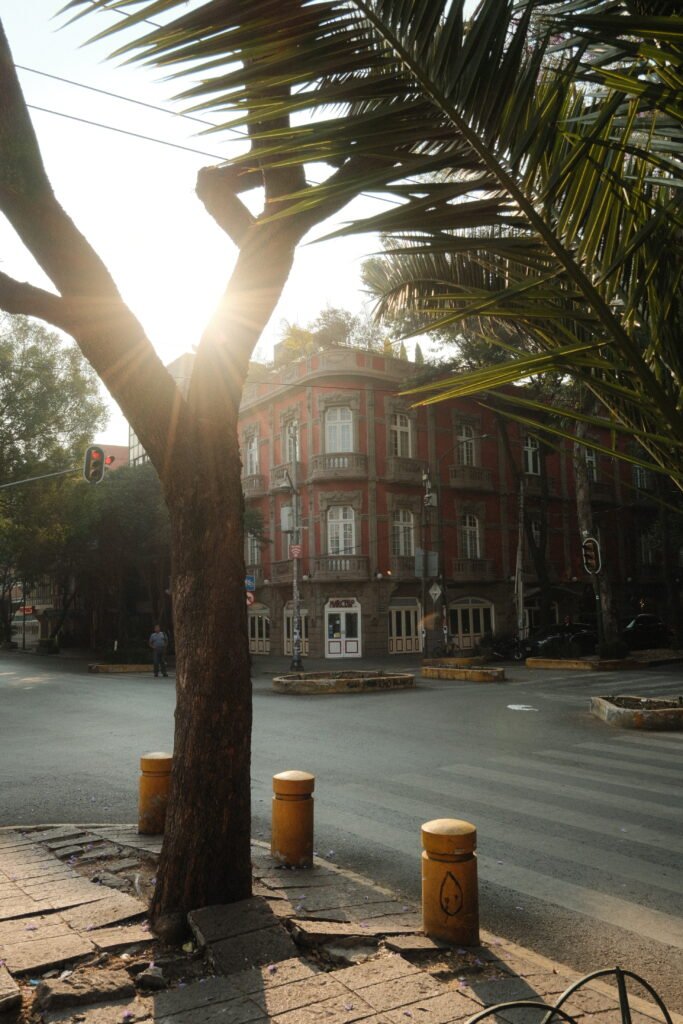
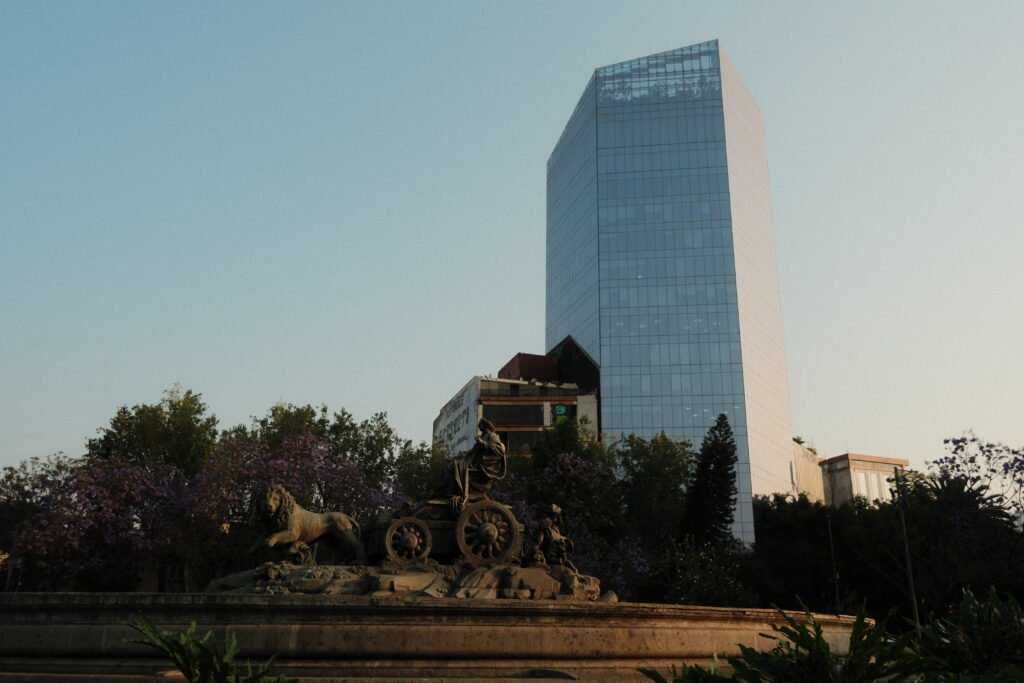
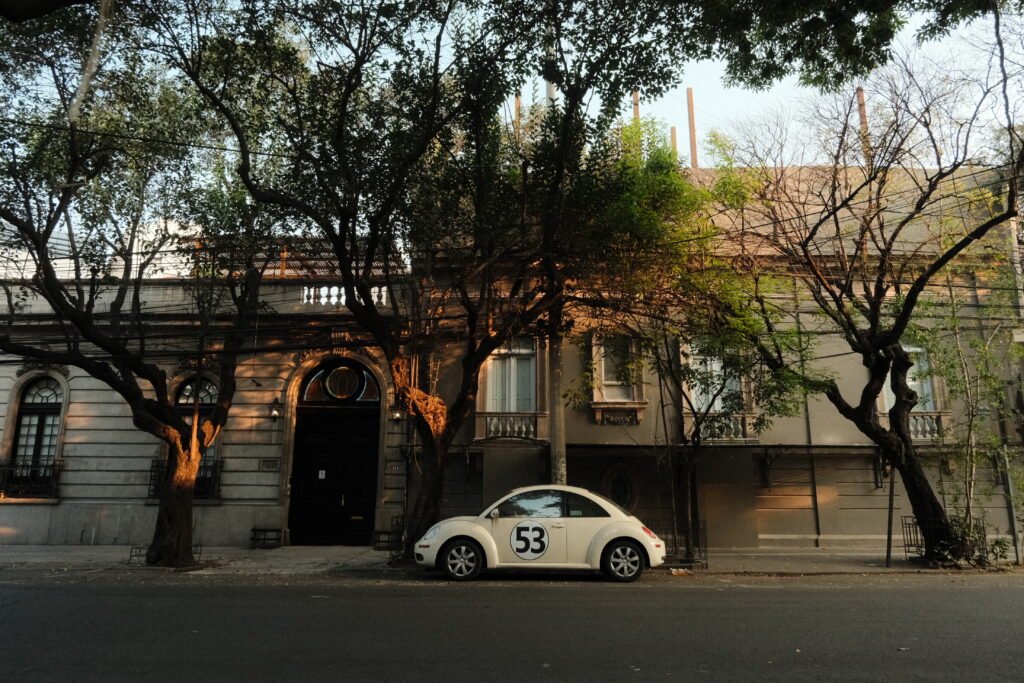
Our first stop was Parque México, where we watched the sunrise and started exploring Condesa on foot.
From there, we walked towards Fuente de Cibeles, taking our time and enjoying the neighbourhood waking up around us.
☕ Breakfast at Panadería Rosetta
We stopped at Panadería Rosetta for breakfast.
We’d heard a lot about it and were curious to see what the hype was about. We had a croissant and a pastry filled with guava, which had been recommended to us.
Honestly? We weren’t blown away.
Maybe part of the popularity comes from the fact that French-style bakeries aren’t as common in Mexico City, but compared with some of the places we discovered later, this wasn’t a highlight for us.
💰 We spent: €14 for coffee and pastries.
Worthwhile? ⭐⭐☆☆☆
Good if you’re nearby and curious, but we wouldn’t go out of our way for it.
🚶 Walk towards the Historic Centre
From Condesa, we continued walking towards Mexico City’s Historic Centre along Avenida Álvaro Obregón, one of the neighbourhood’s main streets, lined with cafés, restaurants, shops and leafy sidewalks. We then made our way towards Avenida Juárez, passing the Hemiciclo a Juárez, an impressive white-marble monument dedicated to former Mexican president Benito Juárez.
We weren’t in a rush, so we simply enjoyed walking through the city and watching it gradually come to life around us.
We also stopped at Mexico City’s Chinatown, which is tiny — basically one street.
It’s definitely not a destination we’d build a day around, but it’s fun to pass through, especially knowing that it’s often described as one of the smallest Chinatowns in the world.
🏛️ Palacio de Bellas Artes
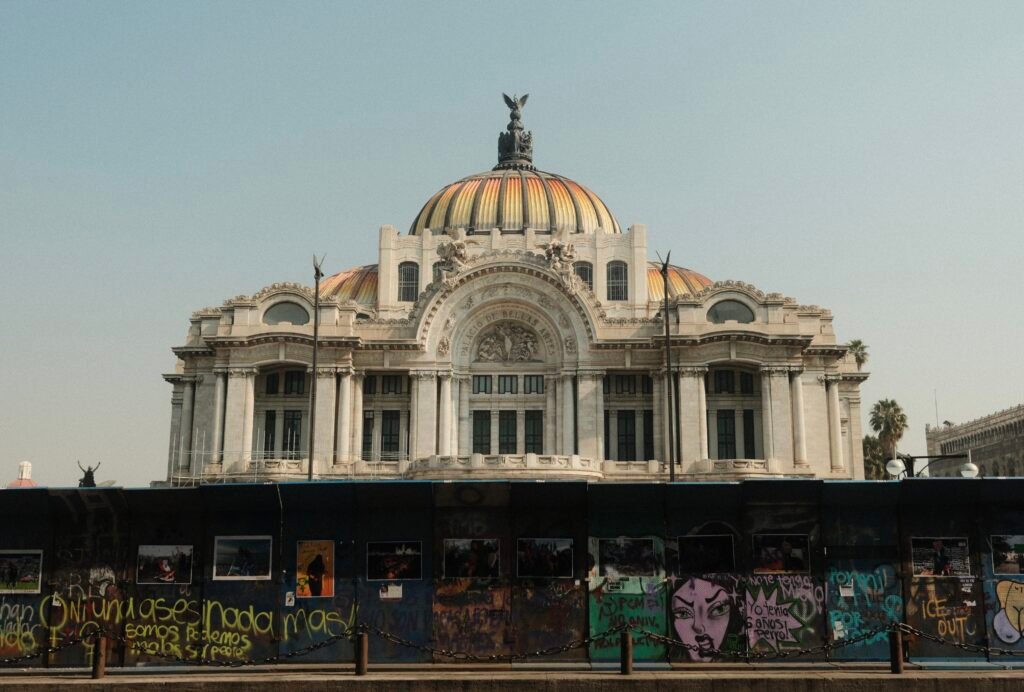
We continued towards Palacio de Bellas Artes, one of the most iconic places to visit in Mexico City, impressive both inside and out. The interior is home to the Museo del Palacio de Bellas Artes, with impressive murals by artists such as Diego Rivera, José Clemente Orozco and David Alfaro Siqueiros. The main concert hall is also spectacular, particularly its enormous crystal curtain depicting Mexico’s volcanoes.
Unfortunately, it was closed when we visited because of the demonstrations around International Women’s Day, so we’ll have to come back to see the inside for ourselves.
Even without going inside, the building itself is impressive, so we’d still recommend walking past.
🔷 Casa de los Azulejos
We stepped inside Casa de los Azulejos, a beautiful historic building famous for its distinctive blue-and-white tiled façade. The interior is worth a quick look too, and there is also a café inside, making it a nice place to stop for a coffee if you have some extra time.
📮 Palacio Postal
Just a few minutes away, Palacio Postal is another beautiful historic building, known for its ornate architecture and impressive interior details. You can get a glimpse inside from the entrance, but we didn’t go any further. If you’re particularly interested in historic buildings and architecture, it may be worth paying to visit the interior.
🌮 First tacos of the trip: Los Cocuyos
And then came something much more important: our first tacos.
We stopped at Taquería Los Cocuyos, and they absolutely delivered.
We also grabbed some flautas from a street stand nearby, and honestly, this was when we started to realise just how much of our trip was probably going to revolve around food.
💰 Tacos + flautas: €12 for two.
🇲🇽 Zócalo & Mexico City Metropolitan Cathedral
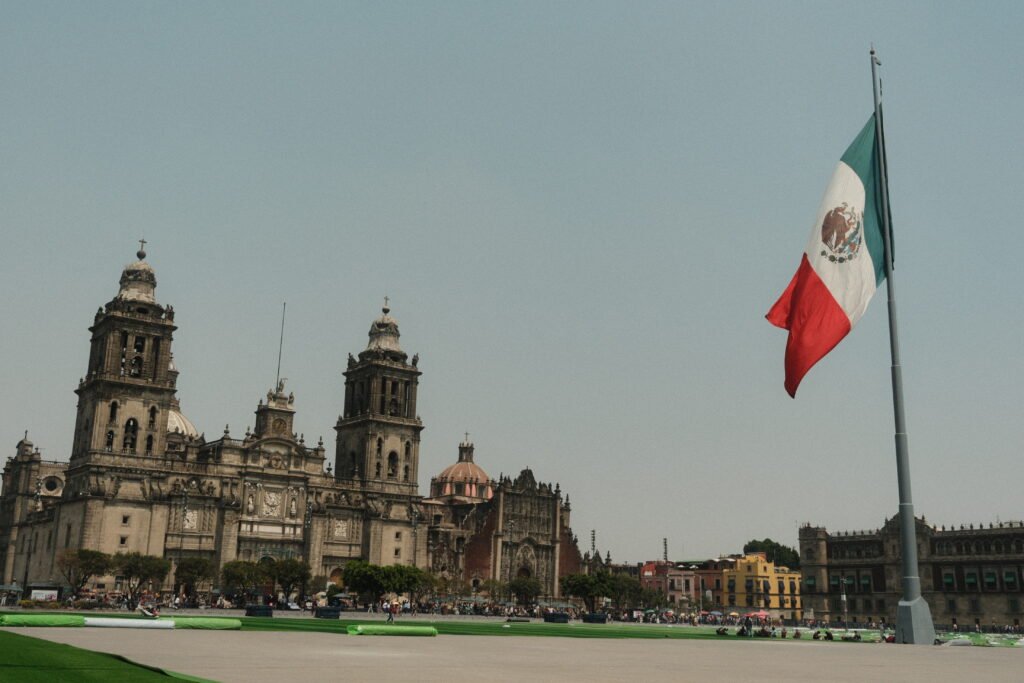
We walked towards the Zócalo, Mexico City’s enormous main square and one of the largest public squares in the world.
It has been at the heart of the city since pre-Hispanic times and today is surrounded by some of Mexico City’s most important historic buildings, including the Metropolitan Cathedral and the National Palace.
The scale of the square is impressive, especially when you see the huge Mexican flag flying in the centre.
We also stepped inside the Metropolitan Cathedral, one of the most important religious buildings in Mexico, and were struck by its size and richly decorated interior.
From there, rather than taking transport, we decided to keep walking.
🪅 Mercado de la Merced
And this is where our slightly questionable decision-making began.
We walked all the way to Mercado de la Merced.
This felt very different from the Mexico City we’d seen so far.
There were barely any tourists, and the market felt extremely local, chaotic and overwhelming. You can find pretty much everything here, but honestly, we didn’t love it.
We’re glad we experienced it because it gave us a glimpse of a very different side of the city, but if you only have three days, this wouldn’t be high on our list.
Our take: ⭐⭐☆☆☆
Interesting if you want to see a very local side of the city, but not essential on a short first visit.
We eventually gave in and took an Uber back to Condesa.
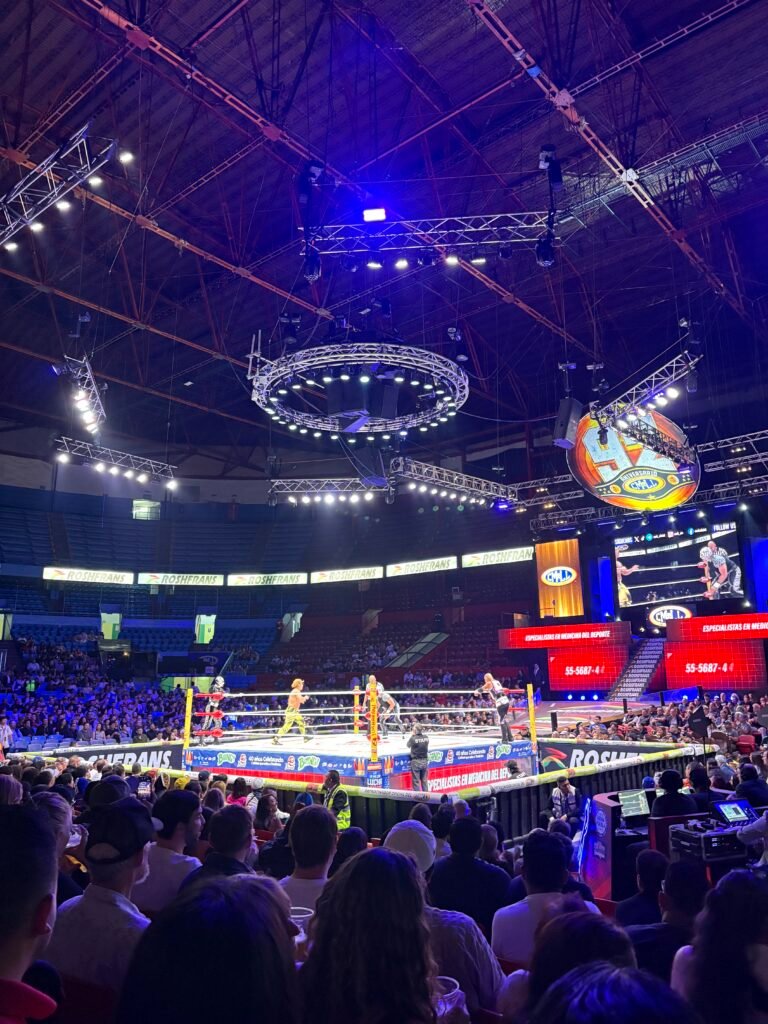
🤼 Lucha Libre at Arena México
After a little rest at the hotel, we headed back out for Lucha Libre.
Lucha Libre takes place at Arena México on Tuesdays, Fridays, Saturdays and Sundays, so check the schedule and buy your tickets when planning your Mexico City itinerary.
We paid around €16.50 per person for our tickets.
We weren’t completely sure what to expect.
At first, I was slightly disappointed because it’s very obvious that the fights are staged. It’s not quite like the wrestling you might have seen on TV, such as WWE.
But that’s also completely missing the point.
Lucha Libre is part of Mexican popular culture, and watching the crowd get involved made the whole experience really fun. There were tourists, but there were also plenty of locals who were clearly there because they genuinely love it.
We had a couple of cold beers, laughed a lot and ended up having a great evening.
Worthwhile? ⭐⭐⭐⭐☆
For the price, absolutely. We probably wouldn’t have paid much more, but at around €16.50 per person, we think it’s a fun way to experience something very Mexican.
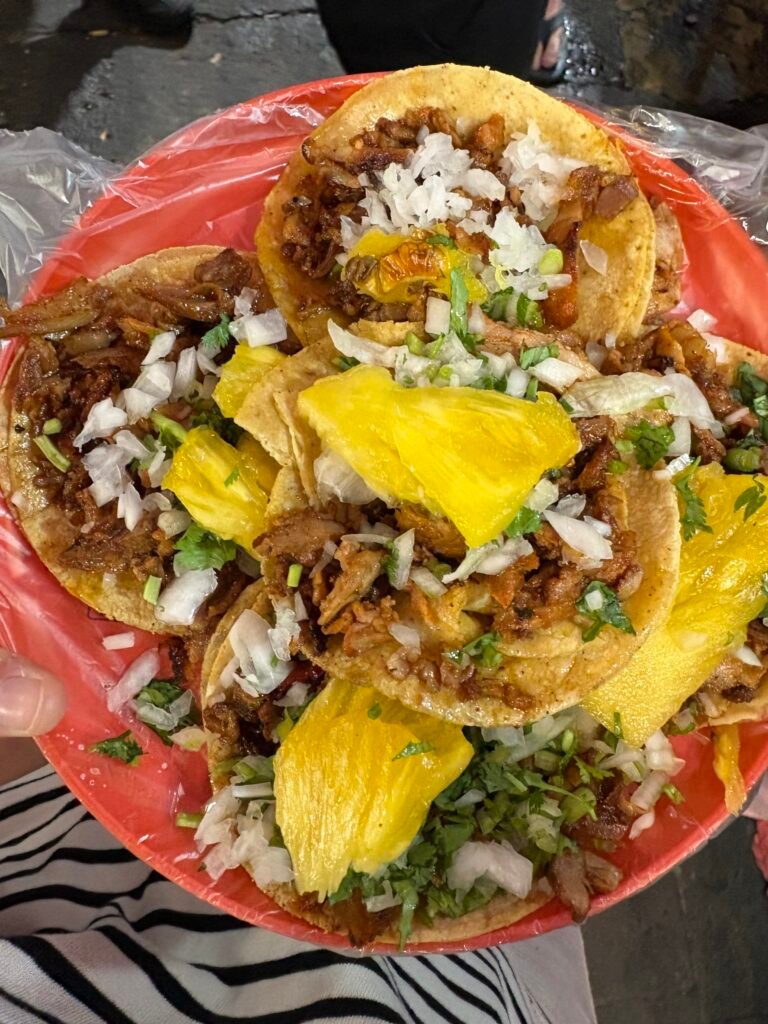
We finished the night with some street tacos near the arena.
💰 Dinner: €6 for two.
And that was Day 1. A very long day, considering we’d arrived at 6am.
Day 2 — Coyoacán, Frida Kahlo & Our Favourite Discovery
For our second day, we headed south to Coyoacán.
🌿 Coyoacán
Coyoacán is one of Mexico City’s most charming neighbourhoods and one of the best places to visit if you’re interested in Frida Kahlo and Mexico’s artistic heritage.
Its colourful streets are filled with leafy parks, historic squares, murals, museums and local markets, giving it a completely different atmosphere from the busy historic centre.
We took Route 24A from Condesa to Coyoacán. We decided to take the local bus simply to try something different and experience a little more of everyday life in Mexico City.
The bus cost just 7.5 pesos per person (around €0.40).
One thing we weren’t expecting is that the bus stops aren’t really marked like traditional bus stops — often, there’s just a small pole. There isn’t a timetable telling you when the next bus will arrive, but you can simply ask the people waiting how long they’ve been there.
The bus comes roughly every 20–30 minutes, so if you’re in a hurry, we’d recommend taking an Uber instead.
Good to know: Bring coins, as you need them to pay on the bus — and the driver doesn’t give change.
☕ Coffee at Beneficio de la Duda
We started the morning with coffee at Beneficio de la Duda.
💰 Coffee: €6 for two.
Nothing complicated — just a good excuse to sit down before exploring.
💙 Casa Azul — Frida Kahlo Museum
We walked past Casa Azul, the famous blue house where Frida Kahlo was born, lived and worked.
We decided not to go inside.
We know that for many visitors this is an absolute must, but when planning our trip, we did some research and realised it wasn’t something we personally wanted to prioritise.
The museum requires booking in advance, which would have meant structuring our days around a fixed time. And although we have a huge amount of respect for Frida Kahlo as an artist, we weren’t particularly interested in seeing the house where she lived.
That doesn’t mean you shouldn’t go.
If Frida Kahlo is important to you, absolutely book it in advance — just don’t leave it until the last minute.
There is also now another place connected to the Kahlo family: Museo Casa Kahlo, also known as Casa Roja. This is particularly connected to Frida’s sister Cristina and the Kahlo family history.
So if you’re interested in Frida, Coyoacán gives you more than just one place to visit.
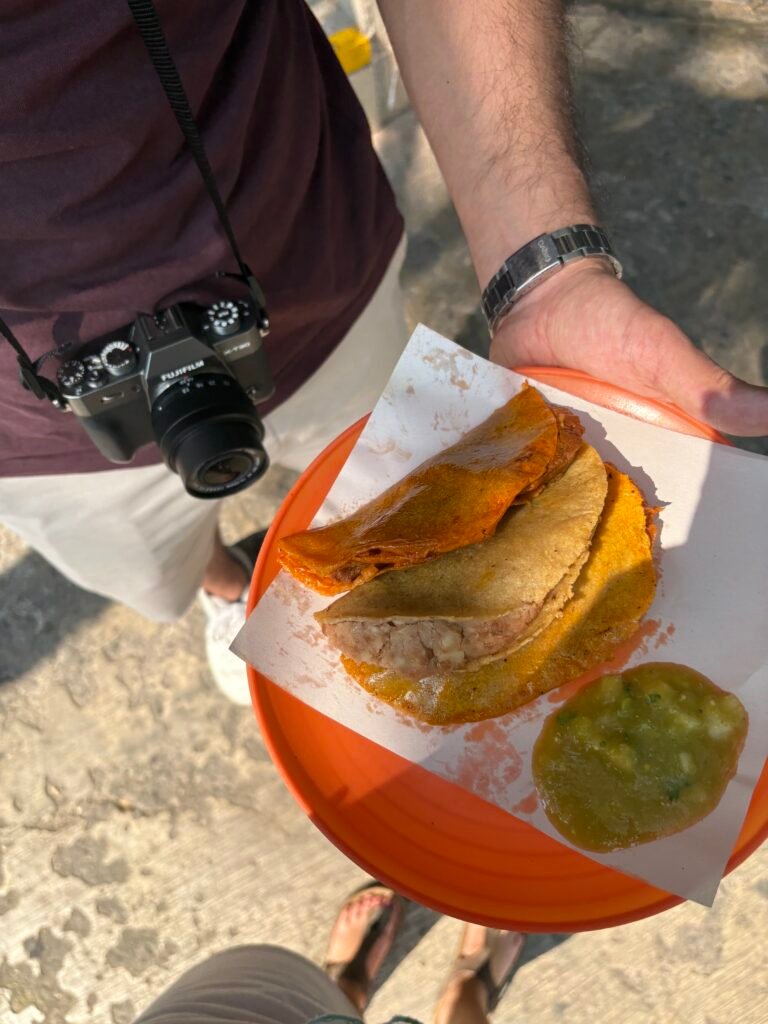
🌮 Tacos at 10am? Obviously.
We then did what felt completely natural at this point:
We ate tacos.
It was around 10am.
We have no regrets.
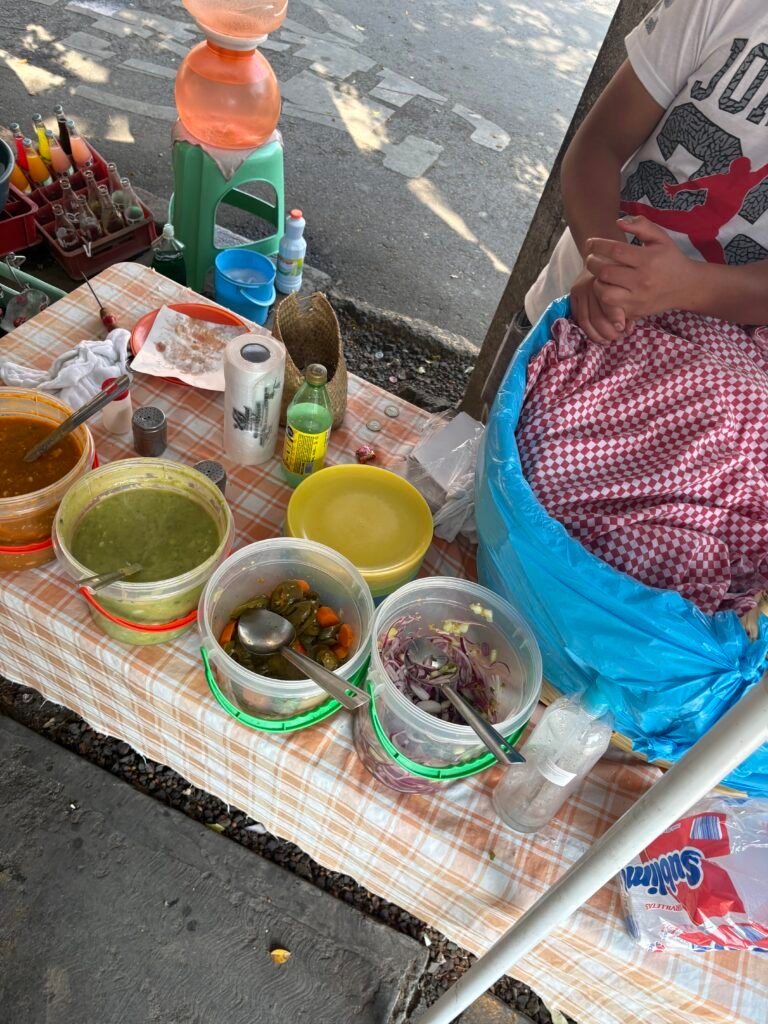
We found a small street stand right in front of this OXXO, where we saw plenty of locals eating.
And, as we’ve already established, our rule was simple: if locals are eating there, especially the police, we’re probably in the right place.
💰 We paid: €4 for two.
We found another similar-looking stand nearby on Google Maps that also seems to have great reviews, so we’re leaving it here as an alternative in case you can’t find the exact one we visited.
We ate alongside locals, and honestly, this became one of our favourite things about Mexico City.
We’d always encourage you to look beyond restaurants with thousands of reviews. Sometimes the best meal is a tiny stand you would have walked straight past.
🌈 Exploring Coyoacán
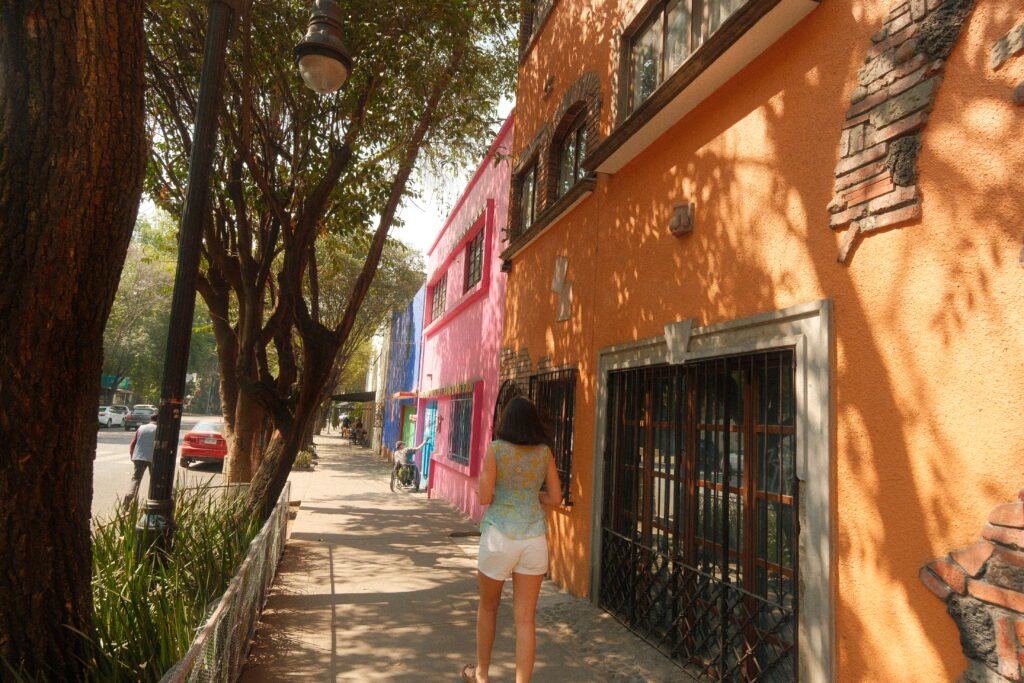
We spent the rest of the morning exploring Coyoacán on foot.
We passed Fuente de los Coyotes, one of the most recognizable spots in Coyoacán, with its two bronze coyotes surrounded by a small fountain.
We then wandered around Plaza de la Conchita, a charming little square known for its historic church and peaceful, leafy atmosphere.
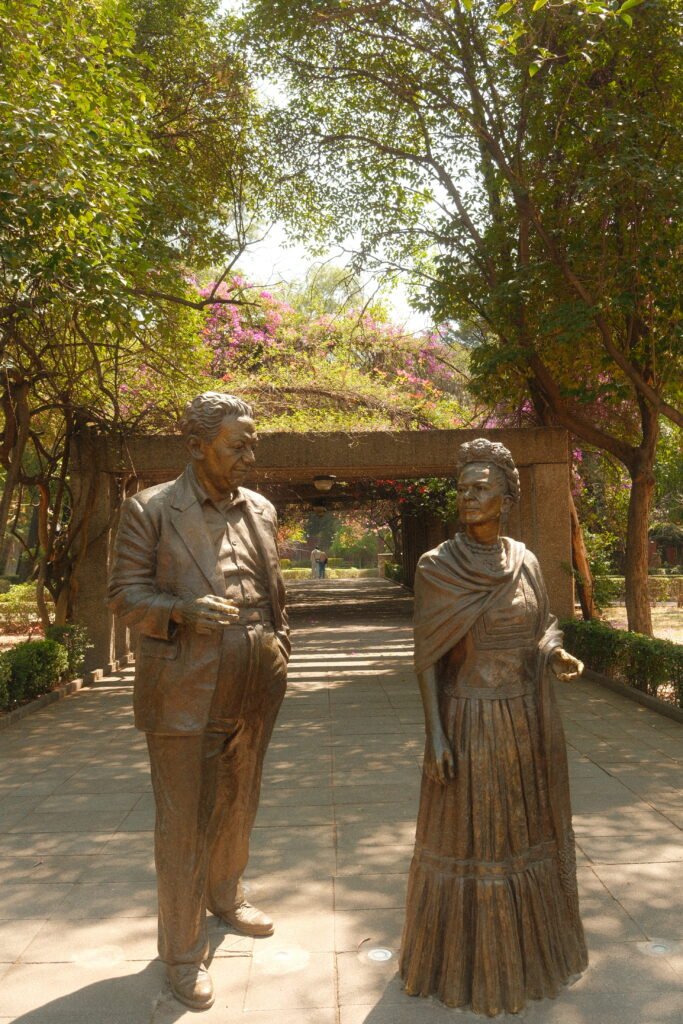
From there, we continued through the neighbourhood’s parks and colourful streets, eventually reaching Frida Kahlo Park, a small green space dedicated to the artist and filled with murals, sculptures and references to her life.
There was no strict plan.
And that was exactly what we liked about it.
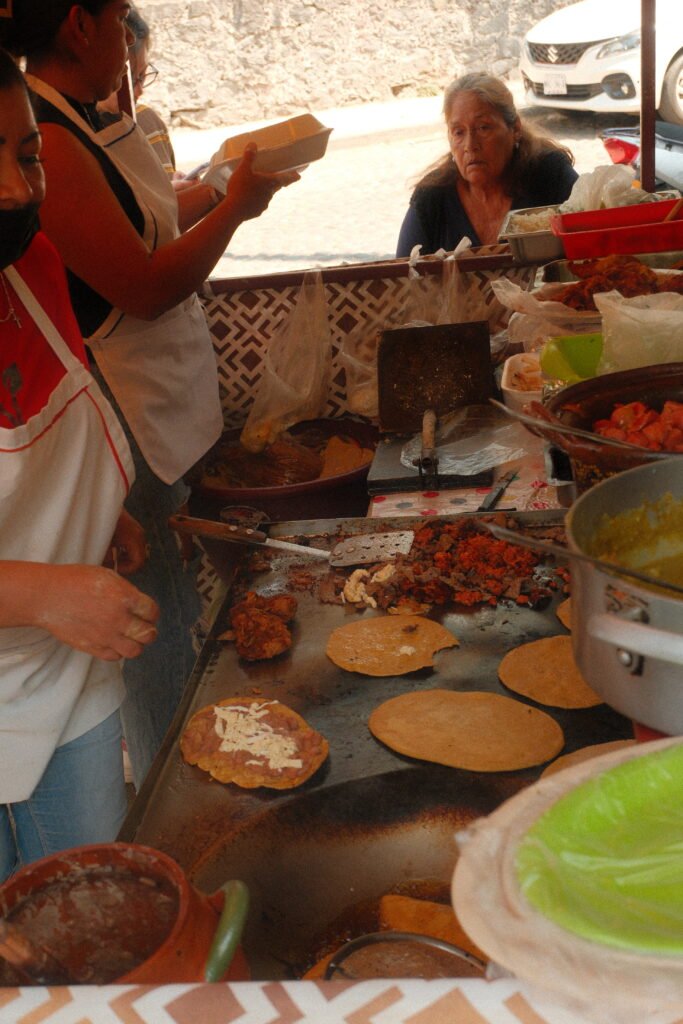
Near the park, we found a small stand filled with locals selling gorditas.
We tried them.
And it was love at first bite.
We still talk about these gorditas today.
This was probably one of our favourite food discoveries of the entire trip — and a perfect example of why we prefer leaving some room in our itineraries for spontaneous discoveries.
🦗 Mercado de Coyoacán
Mercado de Coyoacán is a great place to stop for Mexican food.
You’ll find plenty of food stalls selling all kinds of Mexican specialties, including some more unusual ones like edible insects, beetles and other crunchy snacks.
There are also small restaurants with counters and food stalls where you can sit down and eat a proper meal.
It’s a fun place to walk around, try something different and soak up the local atmosphere.
It’s lively, colourful and much more relaxed than Mercado de la Merced felt to us.
We also stopped by the Frida Kahlo mural before heading back towards Condesa.
Our take on Coyoacán: ⭐⭐⭐⭐⭐
Absolutely worthwhile.
Even if you don’t visit Casa Azul, we’d still dedicate at least half a day to Coyoacán.
🌅 Sunset at Ángel de la Independencia
Back in Condesa, we headed out again and walked towards Ángel de la Independencia.
Ángel de la Independencia is one of Mexico City’s most iconic landmarks. Standing in the middle of Paseo de la Reforma, the golden statue was built to commemorate Mexico’s independence from Spain. It has become one of the city’s most recognizable symbols and an important meeting point for celebrations and public events.
We happened to arrive at just the right time and were rewarded with a beautiful sunset.
This was another reminder that you don’t necessarily need to schedule every minute of a trip. Sometimes the best moments happen simply because you’re walking around.
📚 Biblioteca Vasconcelos
We then made one last detour to visit Biblioteca Vasconcelos.
This one requires a small disclaimer from us.
We love visiting unusual libraries around the world, so for us, it was absolutely worth the detour.
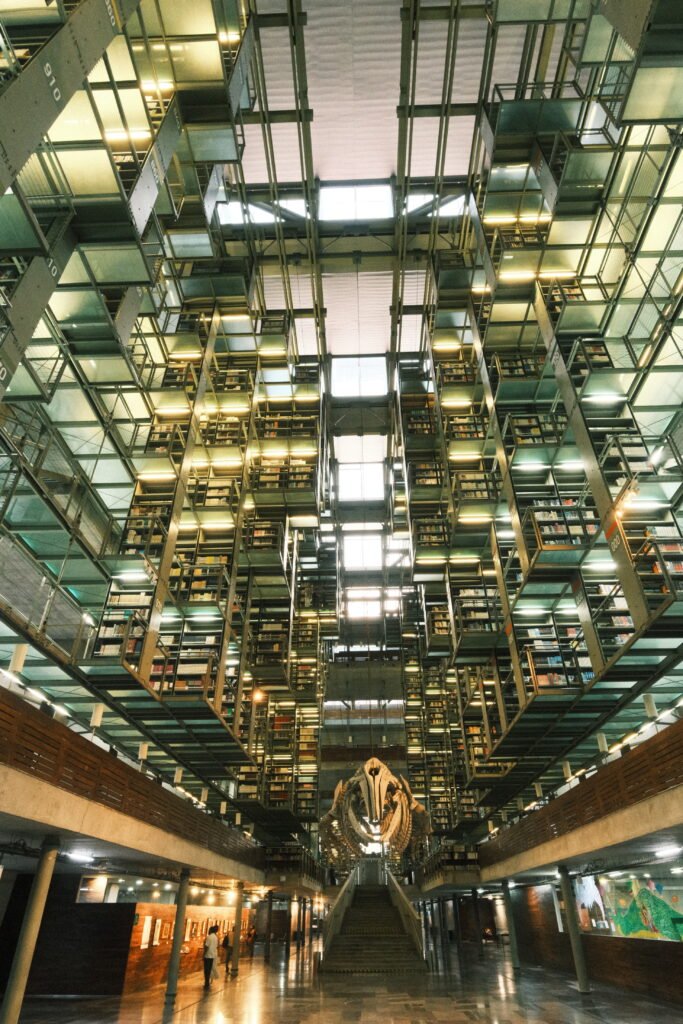
Biblioteca Vasconcelos is one of Mexico City’s most striking modern buildings. Opened in 2006, it is known for its unusual open-shelf design, suspended steel bookcases and contemporary architecture. It also houses Matrix Móvil, a striking whale skeleton installation by Mexican artist Gabriel Orozco.
And entrance is free.
Our take: ⭐⭐⭐⭐☆
If you love architecture, libraries or unusual buildings, we’d recommend it.
If that’s not particularly your thing, though, we wouldn’t make the detour just for this. It’s relatively far from the main tourist areas and there isn’t a huge amount around it.
🌮 Michelin-starred tacos… and then better tacos?
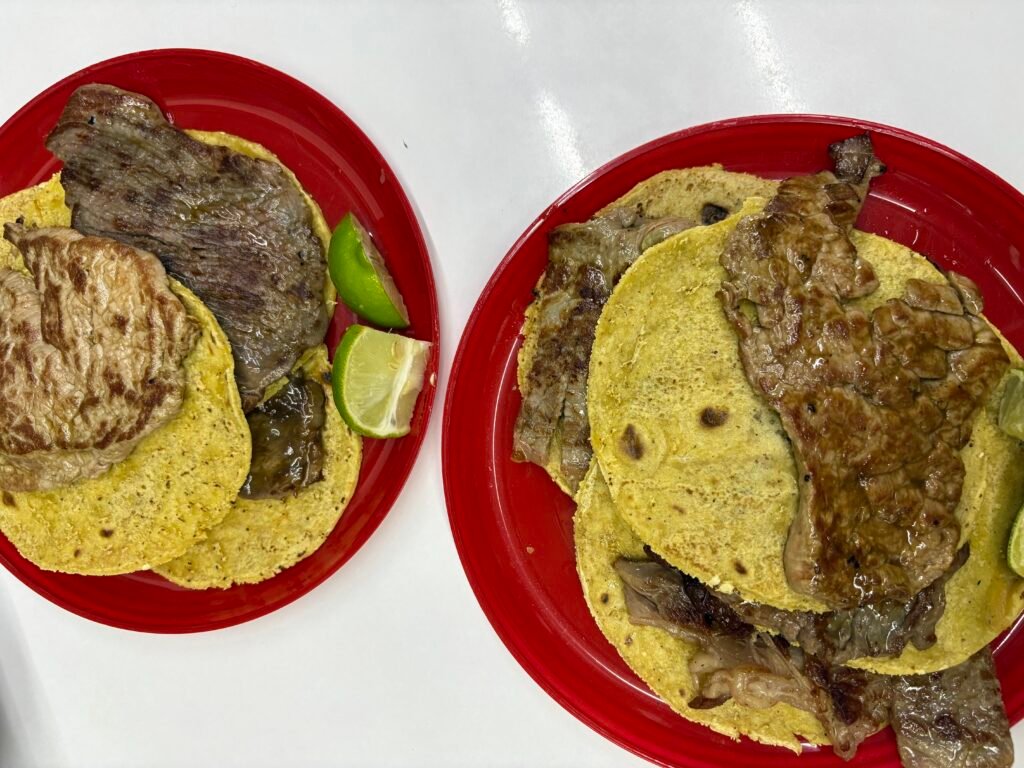
From the library, we walked to Taquería El Califa de León, the famous Michelin-starred taquería.
We tried the bistec, costilla and gaonera.
The tacos are incredibly simple: meat, tortilla and lime.
We had exactly the question you’re probably asking:
“With so many amazing tacos in Mexico City, why did these get a Michelin star?”
The answer we were given was that the simplicity is precisely what makes them special.
And yes, they were good.
But…
We’d eaten so many amazing tacos already that we left slightly underwhelmed.
They were also noticeably more expensive than the other taquerias we’d visited.
💰 El Califa de León: €16 for two.
Worthwhile? ⭐⭐⭐☆☆
Worth trying if you’re curious about the Michelin star, but we wouldn’t say it’s the best taco experience we had in Mexico City.
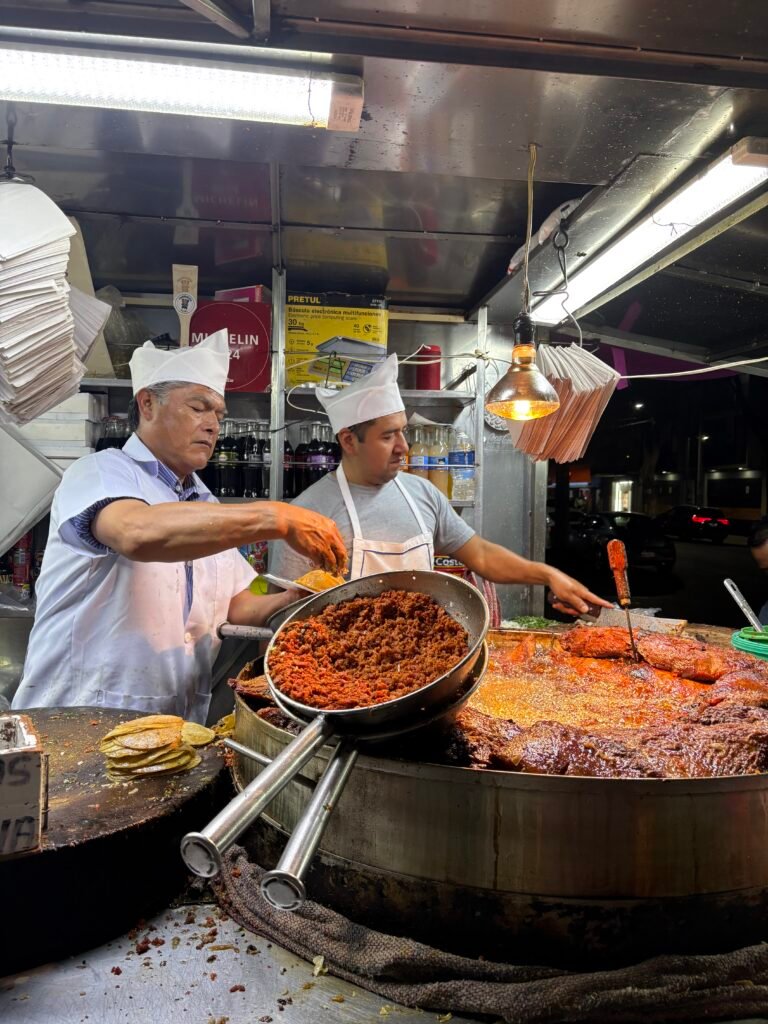
🌮 El Paisa
And then we made the best possible decision.
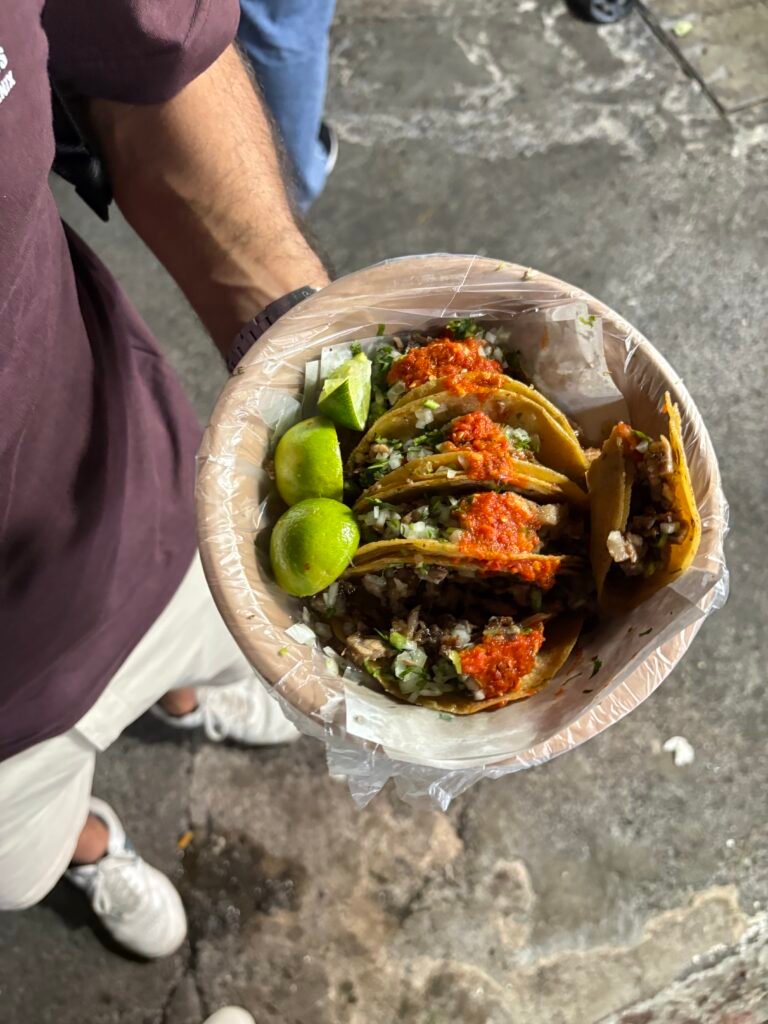
We noticed Taquería El Paisa nearby, right in the middle of the street.
So obviously we went in.
And…
OMG.
The tacos were cheap, messy, covered in sauce and absolutely delicious.
Sauce running down our hands, faces and arms.
Exactly how tacos should be.
This was one of those moments where we looked at each other and thought:
“Yep. This is why we’re here.”
🍸 Salón Palomilla
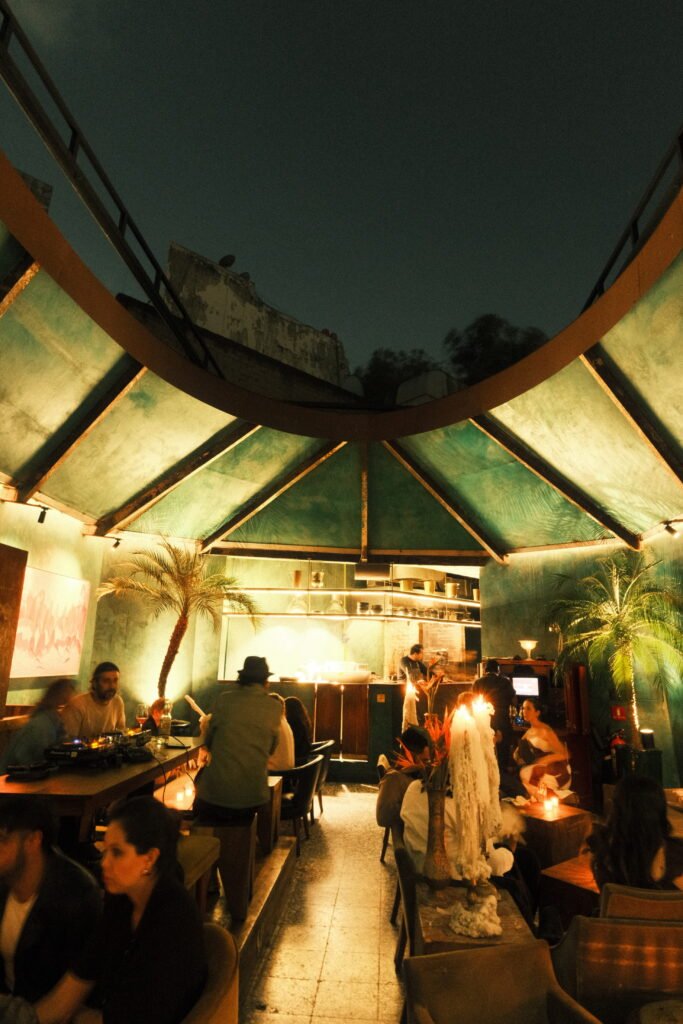
We finished the day at Salón Palomilla.
It was one of our favourite stops of the trip.
The bar has a beautiful open-air rooftop/terrace, which makes it especially nice at night. We came for margaritas, and the atmosphere was exactly what we were looking for — relaxed, lively and a little bit different.
Definitely one of the coolest bars we found in Mexico City.
We loved it.
💰 Margaritas: €28 for two.
Day 3 — Chapultepec, Polanco & One Last Taco
Our third day is the one we’d change the most if we were planning this trip as a once-in-a-lifetime visit.
But we’ll get to that.
First: Chapultepec.
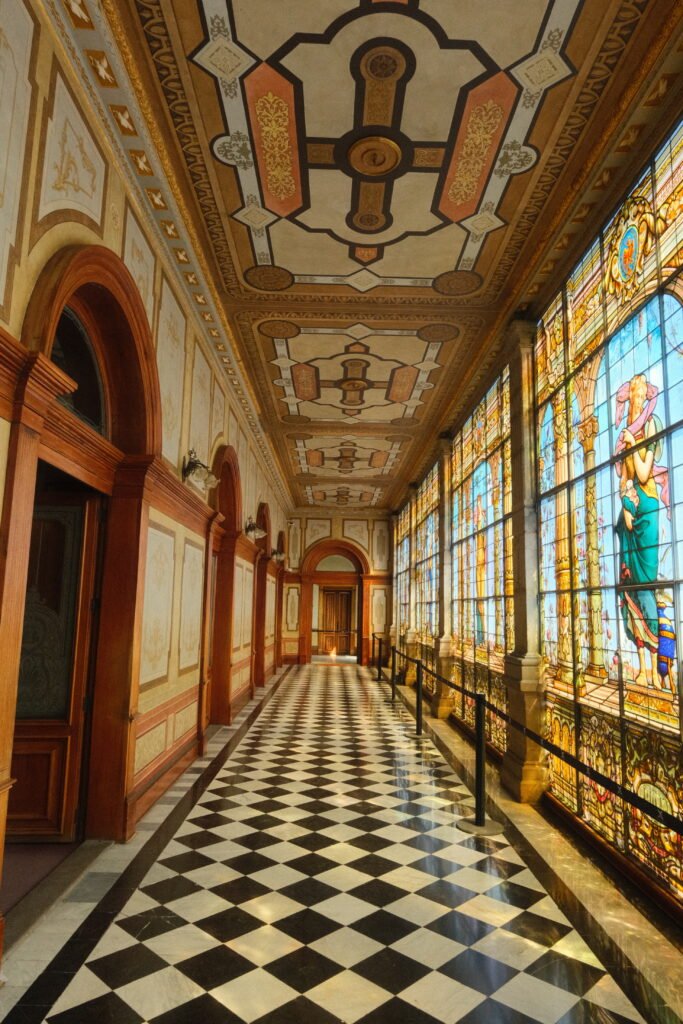
🏰 Chapultepec Castle
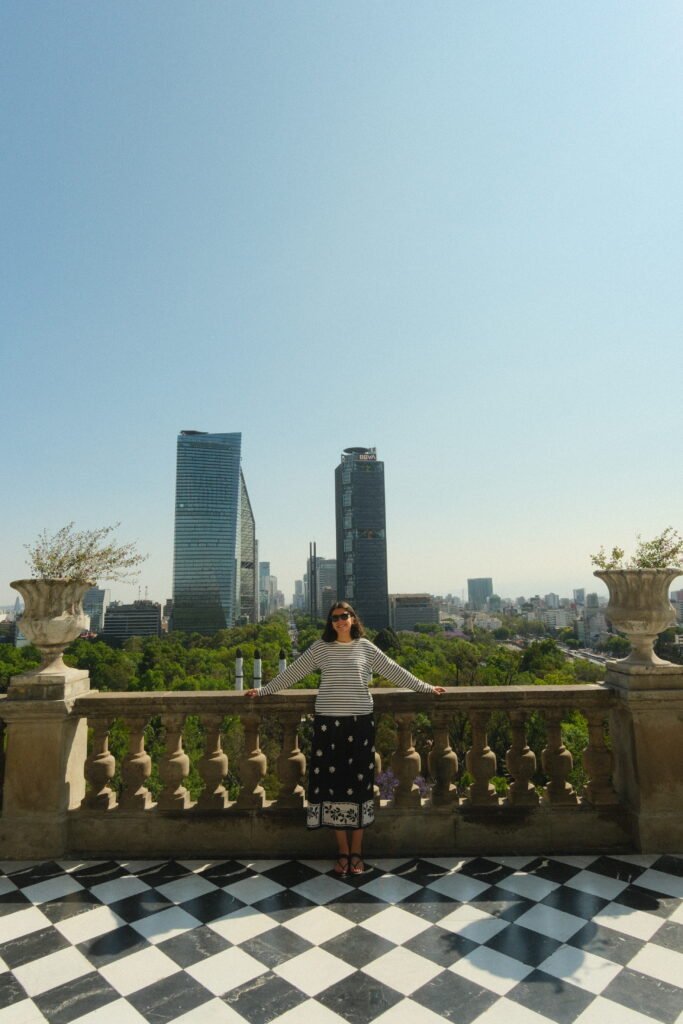
We woke up early and walked around 30 minutes from Condesa to Chapultepec Castle.
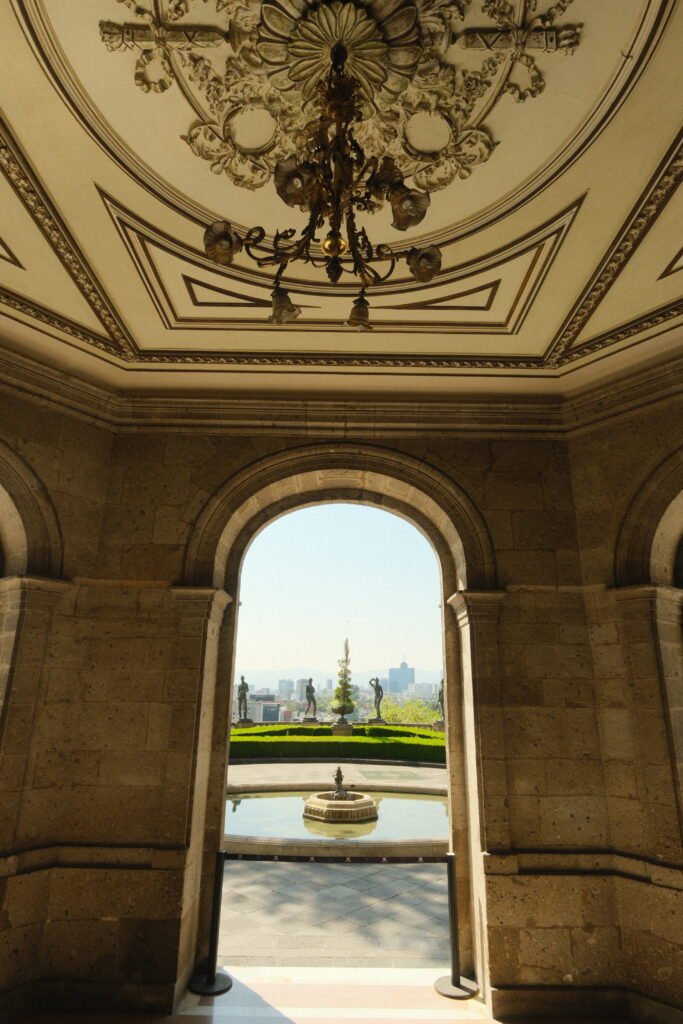
Sitting on top of Chapultepec Hill, this historic castle is now home to Mexico’s National Museum of History. The building dates back to the late 18th century and has served as a military academy, imperial residence and presidential residence.
Today, you can explore its historic rooms, gardens and museum collections while enjoying some of the best views of Mexico City.
We arrived early and were lucky enough to be among the first visitors.
And honestly, this made a huge difference.
The gardens were almost empty, the castle felt incredibly peaceful and we had time to wander around without crowds.
The views over Mexico City were beautiful.
💰 Tickets: €24 for two.
Worthwhile? ⭐⭐⭐⭐⭐
Absolutely.
If you only have three days, we’d still make time for Chapultepec Castle — and we’d go early.
🚌 Seeing Mexico City by Hop-On Hop-Off
After leaving Chapultepec, we realised we had limited time before our flight and wanted to see a little more of Mexico City.
So we decided to try the hop-on hop-off bus.
It’s not normally how we travel, but with only a few hours left, it actually worked surprisingly well.
There are four routes, and we jumped between them for around 2–3 hours. Check the routes and current ticket prices here.
We went as far as the Basilica of Our Lady of Guadalupe, a place we probably wouldn’t have visited otherwise, and got a completely different perspective of the city.
⛪ Basilica of Our Lady of Guadalupe
The Basilica of Our Lady of Guadalupe is one of the most important Catholic pilgrimage sites in Mexico and one of the most visited religious sites in the world.
The basilica is dedicated to Our Lady of Guadalupe, Mexico’s patron saint, whose image is traditionally believed to have appeared on the cloak of Juan Diego in 1531.
We probably wouldn’t have come here on our own, but it was one of the stops on the Hop-On Hop-Off route.
We didn’t get off because we didn’t have much time left. Instead, we’d recommend staying on the upper deck of the bus, where you can enjoy the views and take photos without a window in the way.
But if you’re a religious person or simply want to visit the basilica, we definitely recommend getting off and taking the time to explore it.
💰 Hop-on hop-off: €36 for two.
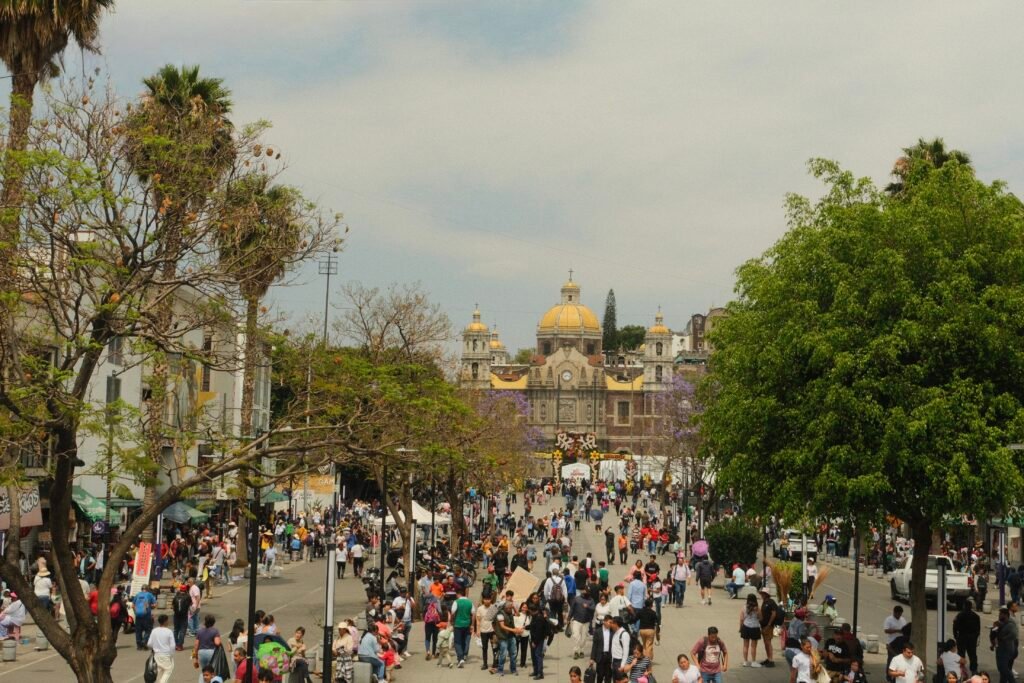
Eventually, we got off in Polanco.
🏙️ Polanco
Polanco is one of Mexico City’s most upscale and cosmopolitan neighbourhoods, known for its elegant streets, modern architecture, high-end restaurants, designer shops and art galleries.
It is also home to some of the city’s most important cultural attractions, including the Museo Soumaya and Museo Nacional de Antropología.
What we found most interesting was the contrast.
After spending the previous days surrounded by street food, busy markets and more chaotic parts of the city, walking through Polanco felt like stepping into a completely different side of Mexico City.
We enjoyed wandering around the neighbourhood, even if the luxury shopping isn’t really our thing.
🌮 El Turix
But the real reason we were happy to be in Polanco?
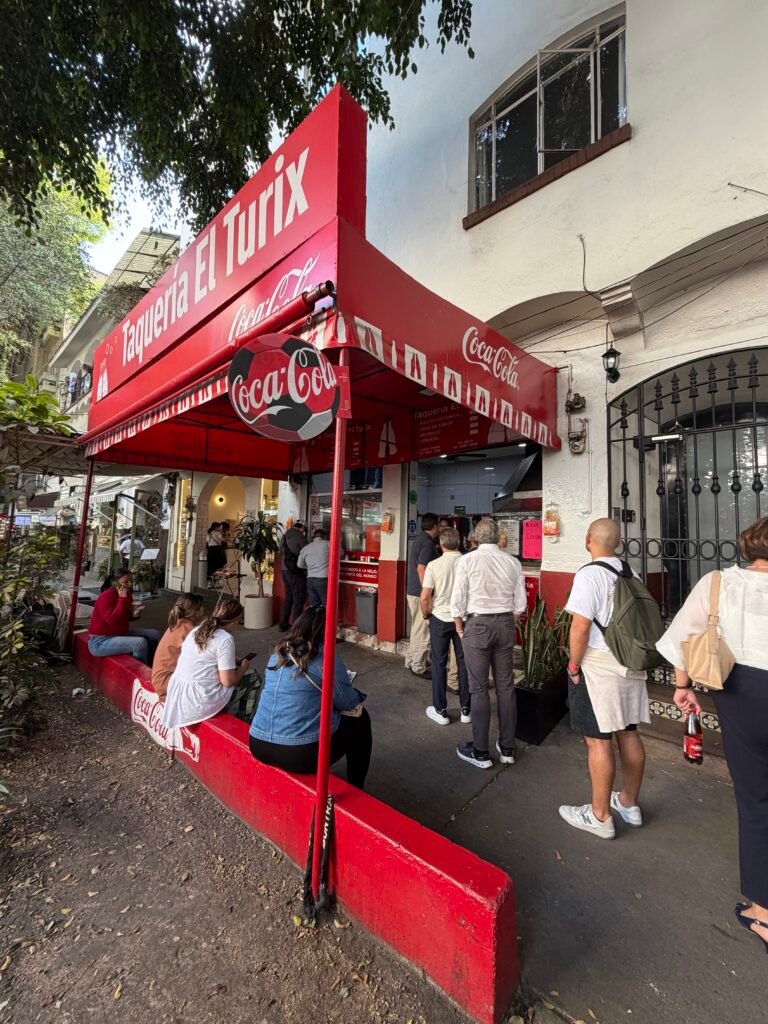
We found Taquería El Turix.
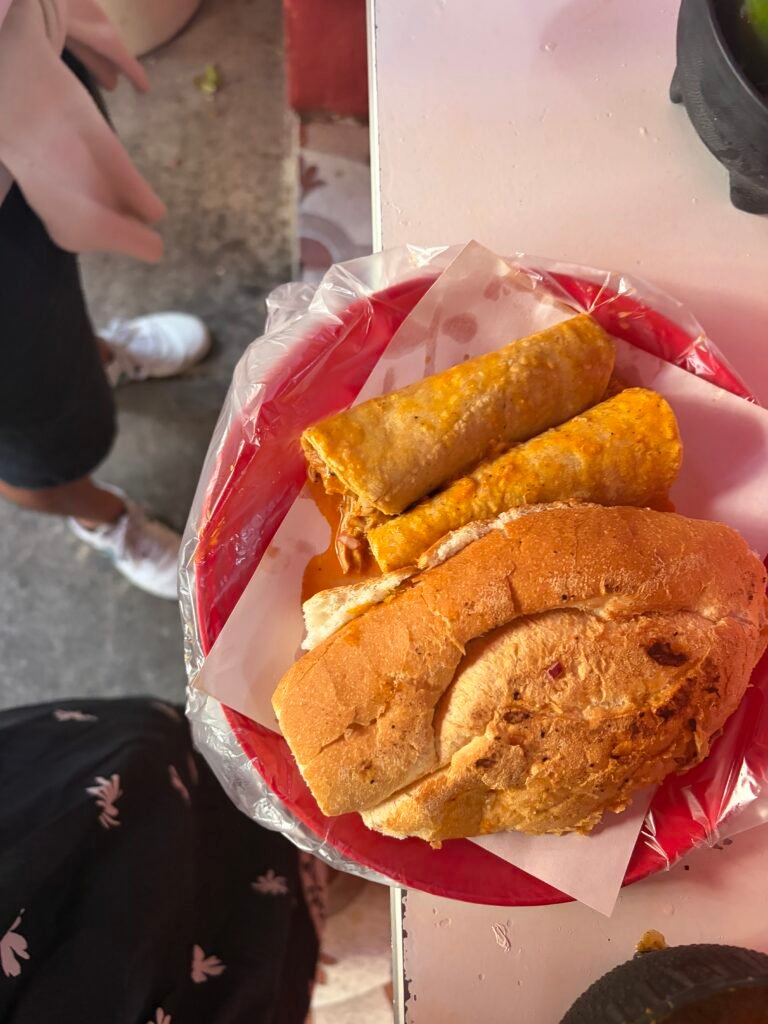
And these were some of our favourite tacos of the entire trip.
The meat. The sauce. The tortillas soaked in that sauce.
MIAM.
We genuinely have no other words.
💰 El Turix: €8 for two.
Worthwhile? ⭐⭐⭐⭐⭐
Yes. Go hungry.
After El Turix, we took an Uber back to the hotel to pick up our luggage, and then another Uber to the airport.
💰 Uber to the airport: €15 for two.
What We’d Do Differently
Here’s where we’d be completely honest.
We knew before arriving that we’d come back to Mexico City. We didn’t feel the need to see absolutely everything in one trip.
So we deliberately left some things for next time.
But if this were a once-in-a-lifetime trip, we’d change our third day.
We’d wake up very early and go straight to Teotihuacán, ideally arriving for sunrise.
Then we’d spend the afternoon at Chapultepec and finish the day around Xochimilco at sunset.
With everything we did during our three days, plus Teotihuacán and Xochimilco, we think the trip would feel much more complete.
Would we regret not seeing them this time?
Not really.
We’d rather leave something for the next trip than spend three days rushing from one attraction to another just to say we’d “seen everything.”
And that’s probably the biggest lesson from our time in Mexico City.
You don’t need to see everything to have an incredible trip.
How Much Did We Spend?
Based on what we recorded, we spent around €200 per person, excluding flights, during our three days in Mexico City.
This included accommodation, food, transport, activities and our SIM card.
Some of our biggest expenses were:
- 🏨 Accommodation: €46.50 pp
- 📱 SIM card: €15 pp
- 🤼 Lucha Libre: €16.50 pp
- 🏰 Chapultepec Castle: €12 pp
- 🚌 Hop-on Hop-off: €18 pp
And some of our best meals cost just a few euros.
Which brings us to one of our favourite things about Mexico City:
You don’t need a huge budget to eat incredibly well.
Our Worthwhile Verdict
⭐⭐⭐⭐⭐ Mexico City
Three days in Mexico City was nowhere near enough to see everything — but it was enough to fall in love with the city.
Our favourite parts weren’t necessarily the most famous attractions.
They were the gorditas we stumbled across in Coyoacán, tacos eaten standing on the street, walking through Condesa at sunrise, an almost-empty Chapultepec Castle and margaritas at Salón Palomilla.
We’d absolutely come back.
And next time, we’re going for those gorditas again.
Would we recommend Mexico City for three days?
Absolutely.
Just don’t try to see everything.
Leave some room to get lost, eat something you can’t pronounce and follow the locals.
That’s where the worthwhile experiences tend to be.