
3 Days in Berlin: Our Perfect Itinerary
3 days in Berlin is enough to see many of the city’s major landmarks, but not enough to understand every layer of it. Berlin is a place where history is everywhere: in former railway stations, empty squares, fragments of the Wall and buildings that look completely ordinary until you know what happened there.
We visited Berlin as a family and spent three full days walking and fitting in as much as we could without turning the trip into a race. We saw the main historical sights, spent an afternoon around the East Side Gallery, visited Museum Island and ate plenty of kebabs and sausages.
Some places need time and emotional energy. Others are worth seeing simply because they help you make sense of the city around them. This is exactly what we did, what we would recommend and the small details that made each day feel more complete.
Some links on Worthwhile Guides are affiliate links. This means we may earn a small commission if you book through them, at no extra cost to you. We only share places and experiences we genuinely believe may be useful to our readers.
🗓️ Duration: 3 full days
🚶 Style: Walking + Uber
🏛️ Best for: First-time visitors, history lovers, families and food lovers
💶 Our accommodation cost: €71 per person for 3 nights
🏨 Where we stayed: Schöneberg
Berlin Itinerary: 3 Days — What’s Inside
- Berlin travel tips
- Where we stayed in Berlin: Schöneberg
- Day 1: Berlin’s history, memorials and the Brandenburg Gate
- Day 2: Friedrichshain, street art and the East Side Gallery
- Day 3: The Reichstag, Museum Island and historic Berlin
- Is three days enough for Berlin?
- How Much Did We Spend?
- Our Worthwhile Verdict
So here’s our 3-day Berlin itinerary: exactly what we did, what we think is worth your time, what we would skip or do differently, and the practical details that helped us make the most of three days in the city.
This 3-day Berlin itinerary follows the route we took, with practical details to help you plan your own trip
In a Rush? Here Are Our Favourite Hotels in Berlin
⭐️ CALMA Berlin Mitte — Click here for rates & availability
⭐️ Hotel Johann — Click here for rates & availability
⭐️ Hotel Oderberger — Click here for rates & availability
Not sure which neighbourhood to choose? See more hotels in our complete Berlin accommodation guide
✈️ Before You Go: Berlin Travel Tips
🚆 Getting from the airport to the city
Berlin Brandenburg Airport is well connected to the city by regional trains and the S-Bahn, so public transport is usually the most affordable option if you are travelling alone or as a couple.
At the time of writing, a single ABC-zone ticket — the zone you need for the airport — costs around €5 and is valid for two hours in one direction. Once you are in central Berlin, most journeys only need an AB-zone ticket, which costs around €4. If you are planning to use public transport several times in one day, a 24-hour ticket starts from around €11.20.
Check the BVG app or Google Maps for the most practical route to your hotel, and make sure you buy the correct ticket before boarding.
We arrived around 1pm and took an Uber straight to Schöneberg. It cost €53.50 in total. For a family group with luggage, it was the easiest option after the flight, but we would not necessarily recommend it for everyone.
🚇 Getting around Berlin
We only used Ubers during this trip, partly because we were travelling as a family and could split the cost of the car. But Berlin’s public transport is excellent and would be much more economical if you are travelling solo, as a couple or simply want to keep costs down.
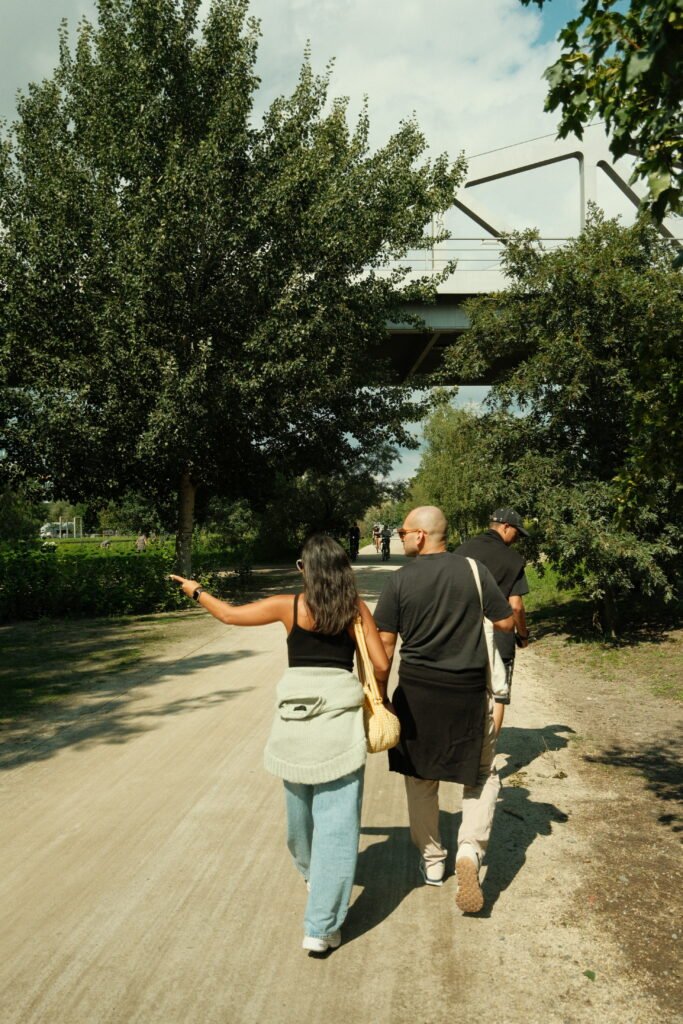
The U-Bahn, S-Bahn, trams and buses will get you almost everywhere in this itinerary. Berlin is much bigger than it looks on a map, though, and the distances between neighbourhoods can quickly add up. We walked more than 17,000 steps each day, so do not feel as though you need to walk absolutely everywhere.
🏛️ Book the Reichstag in advance
The Reichstag dome is free to visit, but you need to reserve your time slot beforehand through the official Bundestag website. Do not leave it until the last minute, especially if you are visiting in high season.
You will also need to bring your passport or official photo ID to enter.
📚 Berlin is easier to enjoy when you understand its history
There is no need to turn your trip into three days of museums, but we do think it is hard to properly understand Berlin without learning at least a little about the rise of Nazism, the Second World War, the Holocaust, the Cold War and the Berlin Wall.
Many of the places in this itinerary are connected to those periods. Once you understand that, the city feels completely different. A bridge is no longer just a bridge, a former station becomes more than an old building, and the Wall stops being only somewhere to take photos.
🏨 Where We Stayed: Schöneberg
We stayed at Coffee INN Hostel in Schöneberg and paid €71 per person for three nights.
It was a simple and practical base for a family trip. The area felt residential, there were plenty of restaurants nearby and it was easy enough to reach the main parts of the city by Uber or public transport.
It is not the area we would choose if we wanted to be in the middle of Berlin’s nightlife, but for a quieter stay with good-value accommodation, it worked well for us.
1️⃣ Day 1: Berlin’s History, Memorials and the Brandenburg Gate
Our first day was the most emotionally intense of the trip. We started with a quick lunch near the hostel, then walked through places connected to the Second World War, the Holocaust and the division of Berlin.
It is a full day, but the stops are close enough together to do mostly on foot.
🥙 Lunch at Hisar Fresh Food
Our first stop was lunch at Hisar Fresh Food, a casual Turkish restaurant near the hostel. We had kebabs and paid around €9.50 per person.
It was exactly what we needed after travelling: quick, filling and uncomplicated.
🚉 Walk past Anhalter Bahnhof
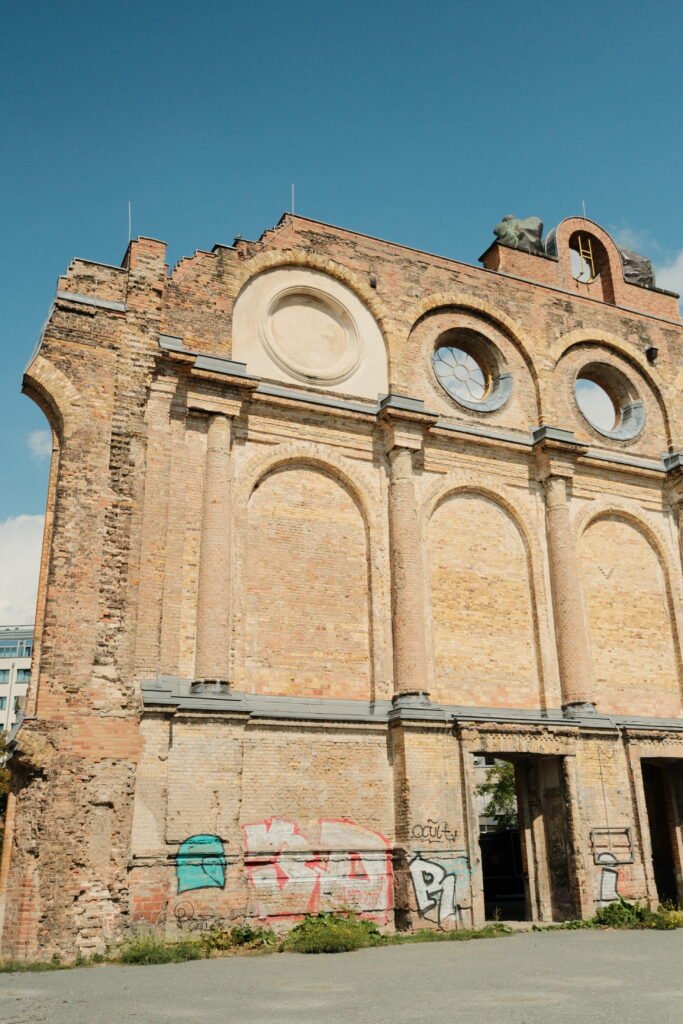
From there, we started walking towards central Berlin. We crossed Schöneberger Wiese and passed Anhalter Bahnhof, the remains of what was once one of Berlin’s most important long-distance railway stations.
At its peak, the station was an enormous, grand entrance to the city. It connected Berlin with destinations in southern Germany, Austria and Italy, and was one of the busiest stations in Europe. It was badly damaged during the Second World War, and today only part of its monumental façade remains.
There is a QR code beside the ruins which lets you see a reconstruction of what the station once looked like. It is a small stop, but one that immediately shows how Berlin has been rebuilt around the physical remains of its past.
🕯️ Topography of Terror
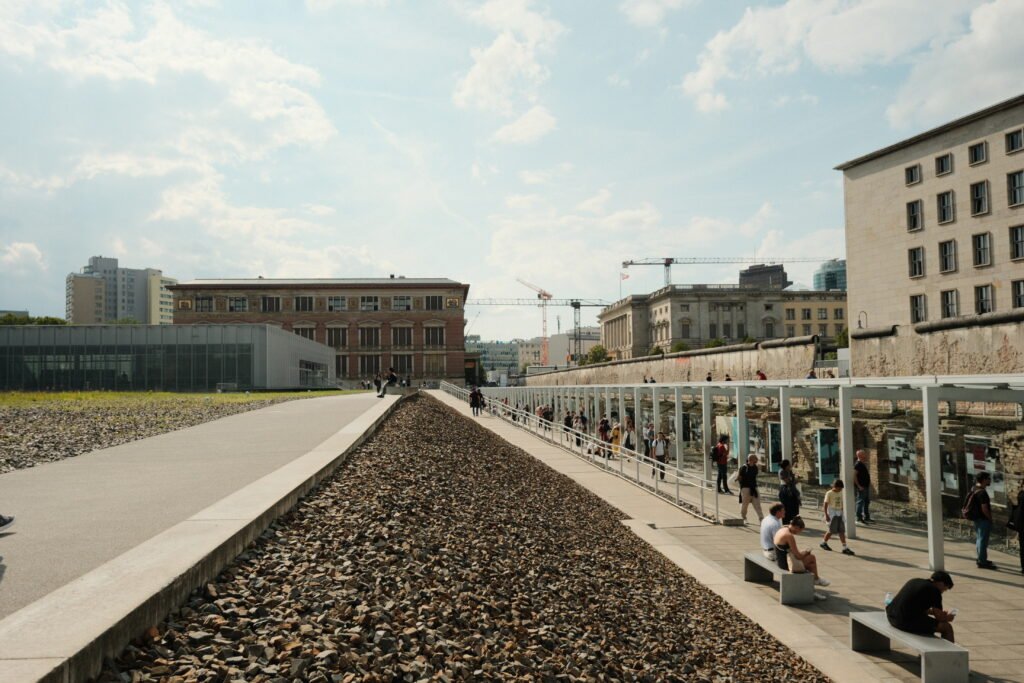
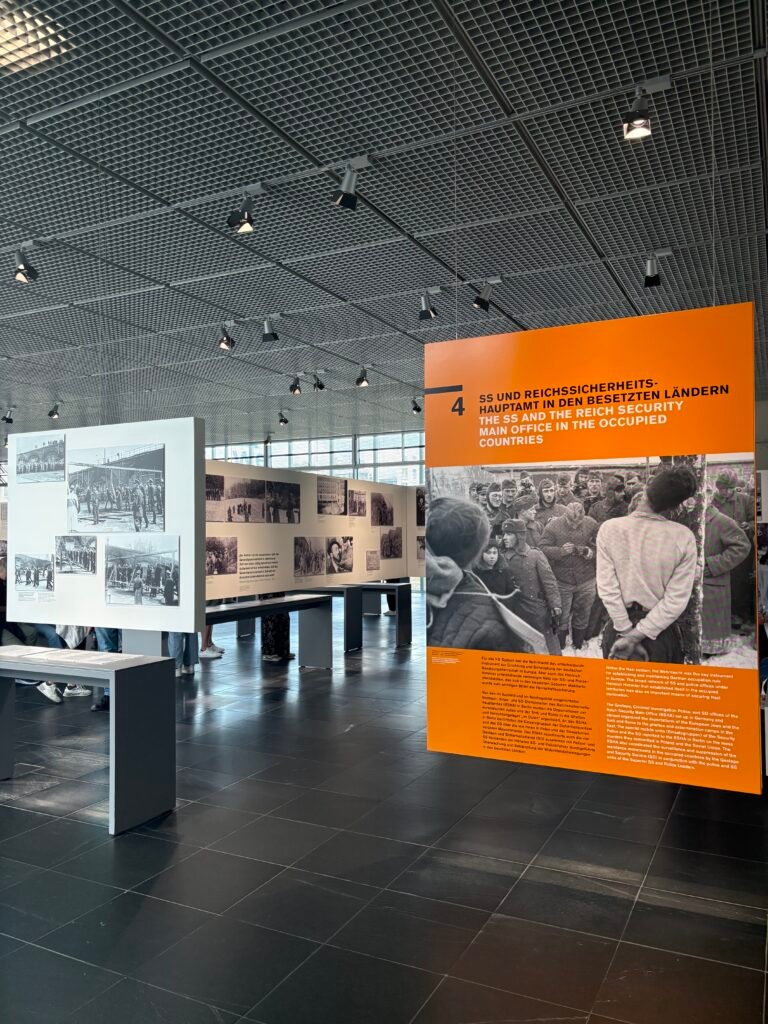
We then walked to Topography of Terror, built on the former headquarters of the Gestapo and SS during the Nazi period.
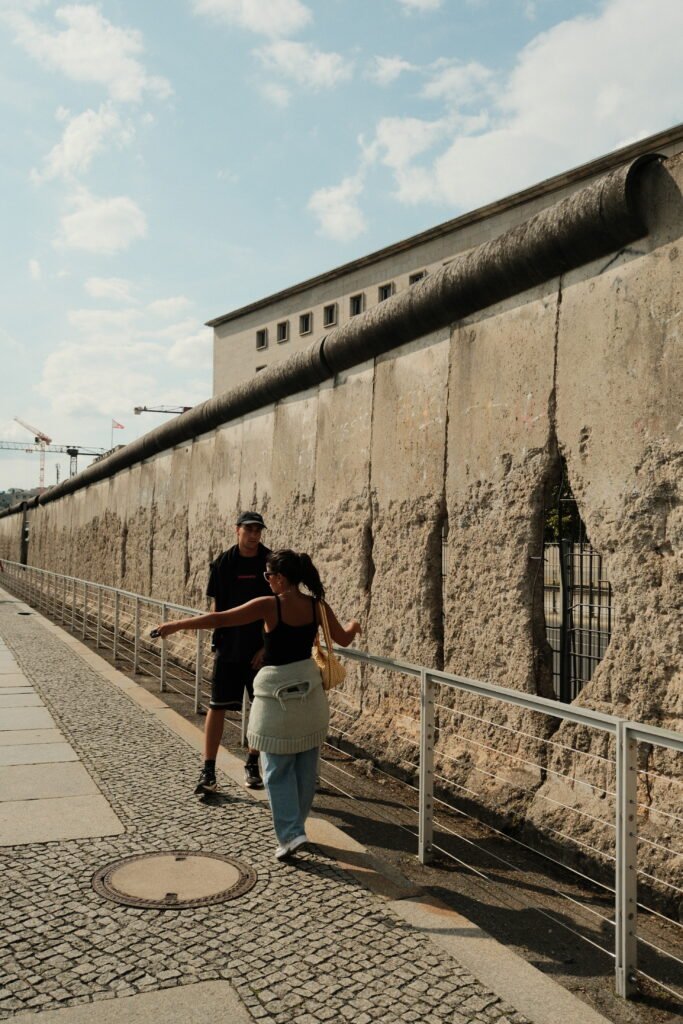
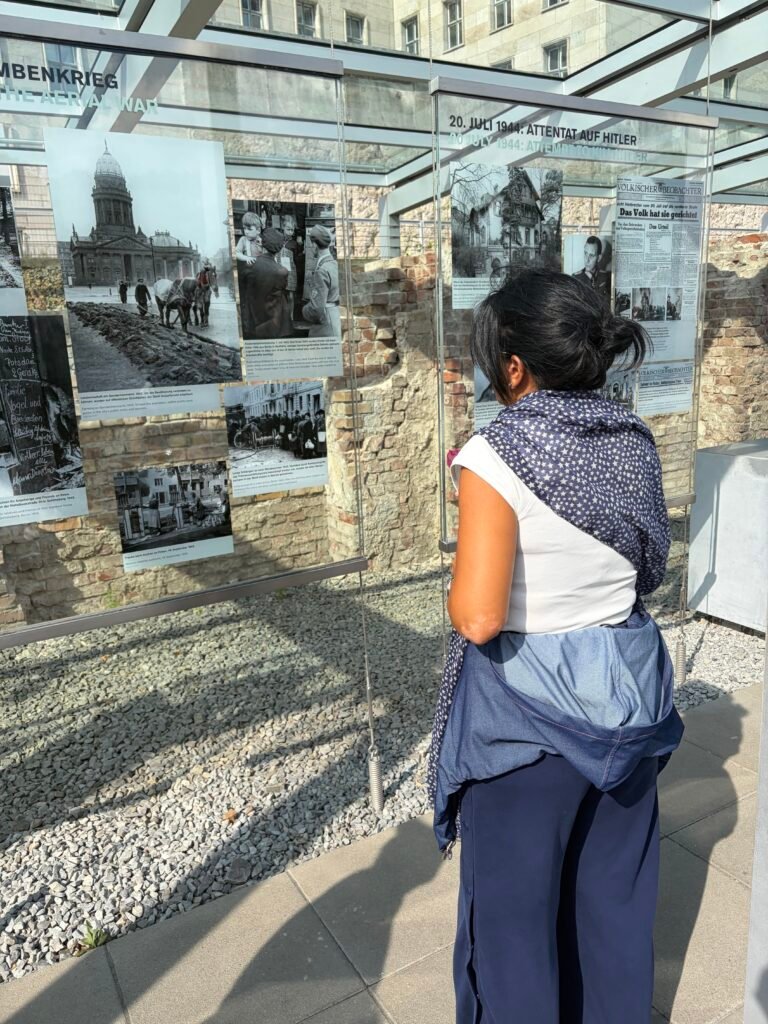
Entry was free when we visited, and there was also a free audio guide. The site has both an indoor exhibition and an outdoor section beside one of the remaining pieces of the Berlin Wall.
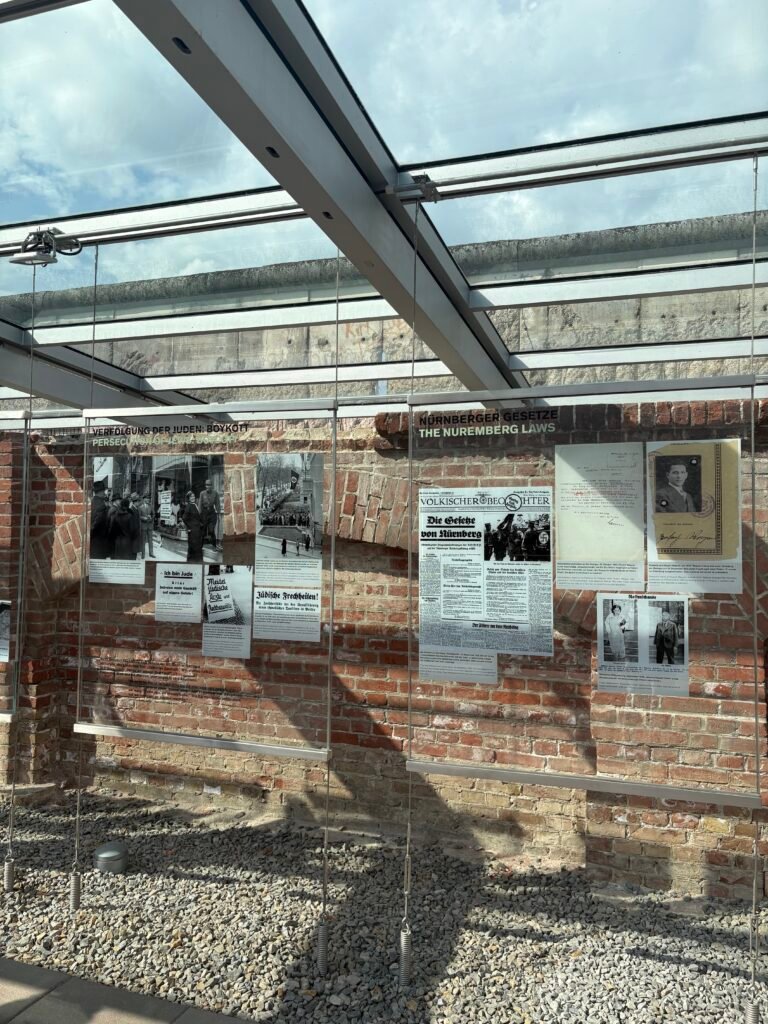
The museum is extremely complete. It explains the rise of Nazism, the machinery of persecution and terror, and how the regime operated. It is important, detailed and very well researched.
At the same time, we found the indoor exhibition a little difficult to follow. There is a huge amount of political information, photographs and documents, and it was sometimes hard to know exactly which section of the audio guide matched the room we were in. That does not make the museum less worthwhile — it simply means you need to go in knowing that it is dense.
If you are travelling with children, the indoor exhibition may feel overwhelming because of both the amount of information and the images. If you are deeply interested in the history, you could easily spend a long time here. If you are not, we would start outside.
The outdoor exhibition follows a surviving section of the Wall and gives a clear chronological overview of the period from 1933 to 1945. It is a much easier introduction to the history, and it helps you understand the city without committing to a full museum visit.
Our advice: begin outside, then decide whether you want to go deeper inside afterwards.
Berlin is not a city you can visit without confronting its history, and we think this is one of the best places to start.
📸 Take a Photoautomaten photo
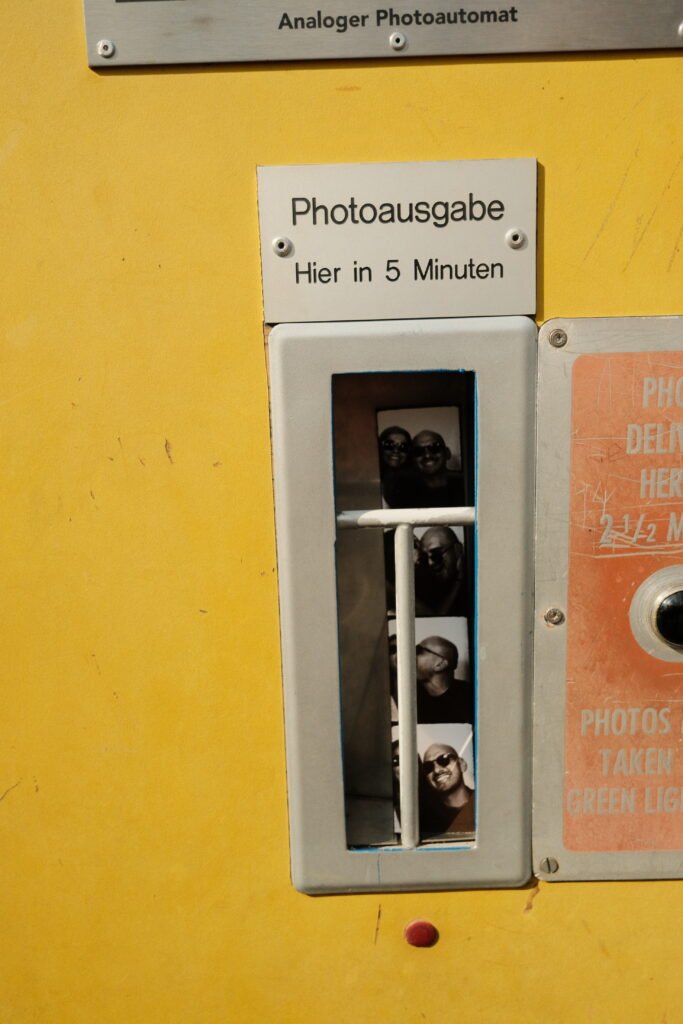
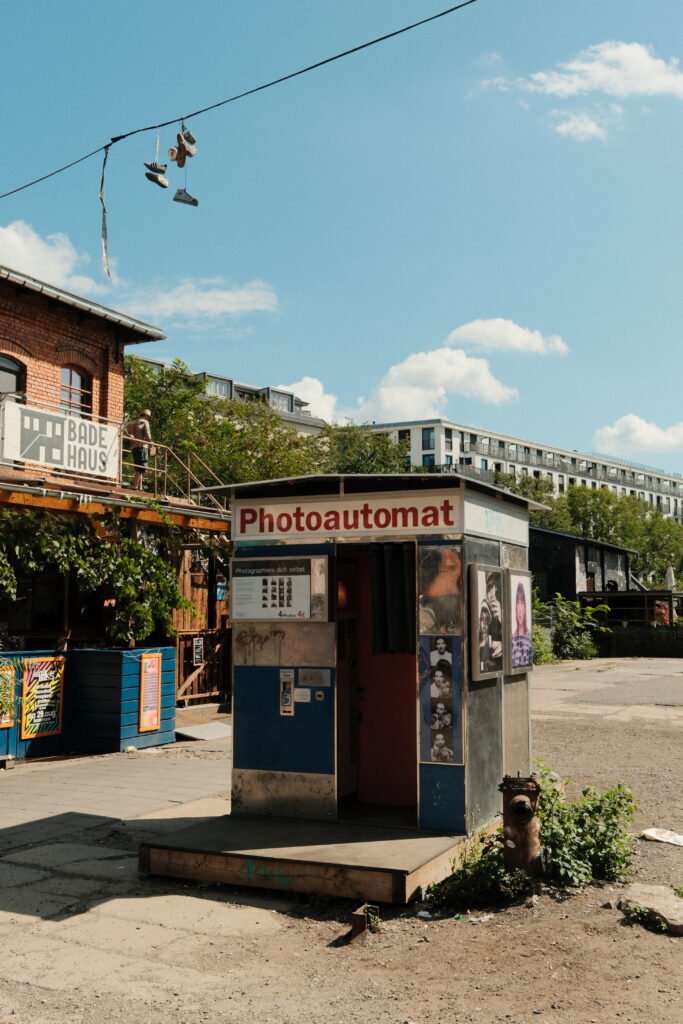
Berlin is known for its old-style Photoautomaten — tiny photo booths that print black-and-white photo strips.
There is one directly opposite Topography of Terror, and we could not resist taking photos. It is such a simple thing, but the photo strip became a lovely souvenir from the trip and is now on our fridge at home.
🚧 Checkpoint Charlie
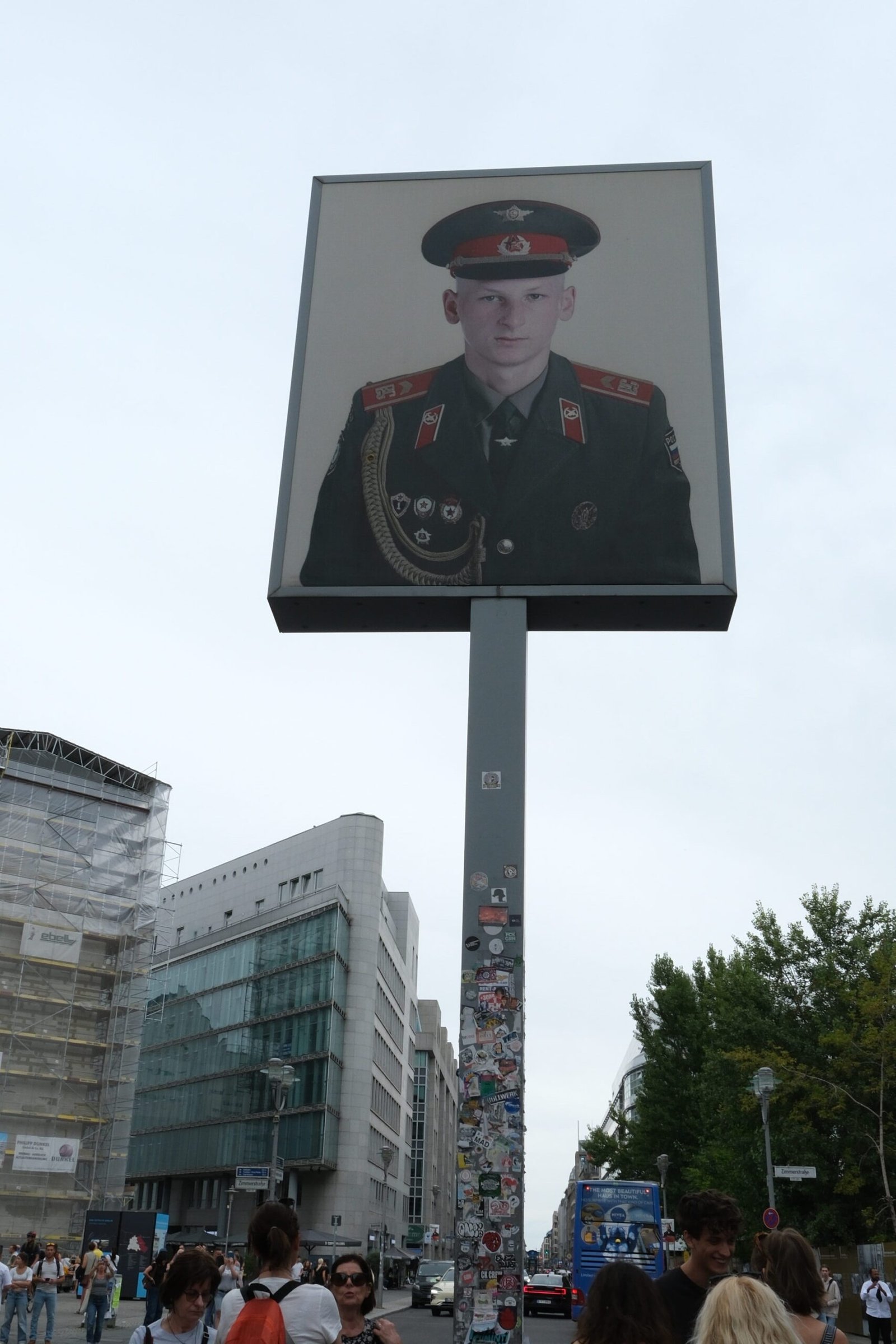
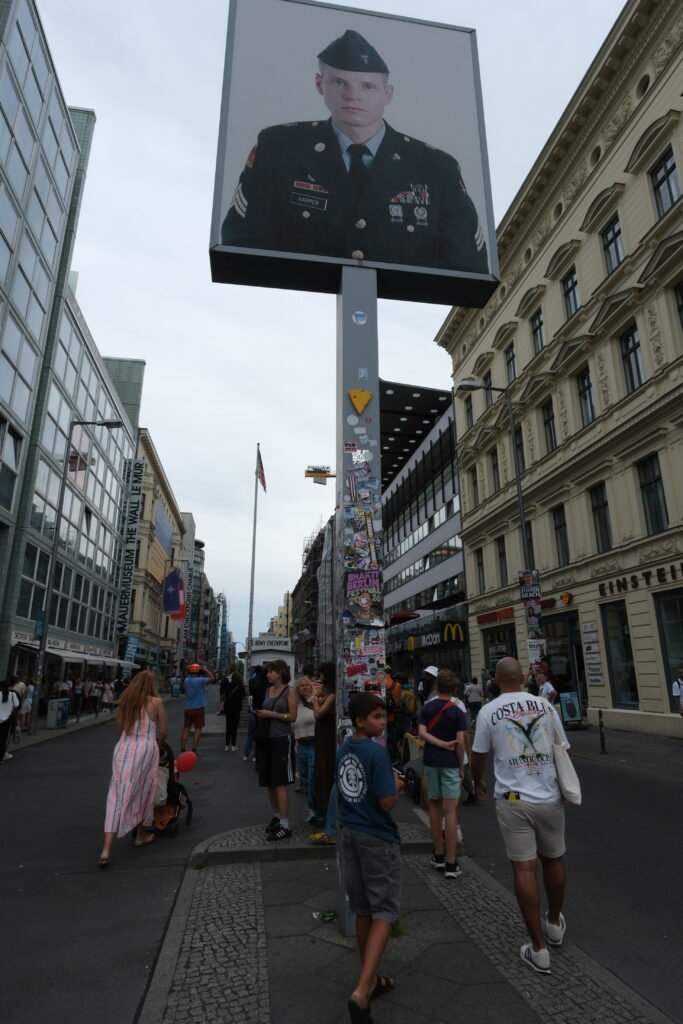
Checkpoint Charlie was less than ten minutes away on foot.
It was the best-known crossing point between the American sector of West Berlin and East Berlin during the Cold War. It became internationally famous in 1961, when American and Soviet tanks faced each other here during one of the tensest moments of the Berlin Crisis.
Today, it is obviously a very touristy stop. The booth you see is a reconstruction, and the area is busy with souvenir shops and people taking photos. Still, after learning about Berlin’s division, we found it interesting to stand at the point where crossing from one side of the city to the other could once have changed someone’s life completely.
We would not spend a huge amount of time here, but it is worth walking past because it helps connect the story of the Wall to a real place.
🕊️ Memorial to the Murdered Jews of Europe
From there, we walked to the Memorial to the Murdered Jews of Europe, also known as the Holocaust Memorial.
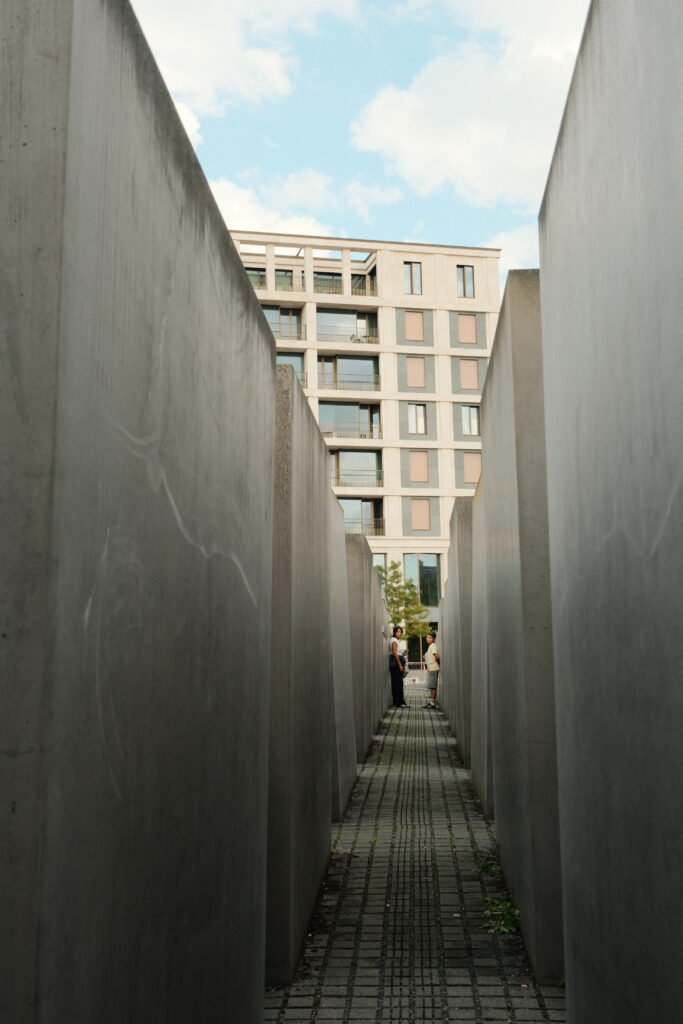
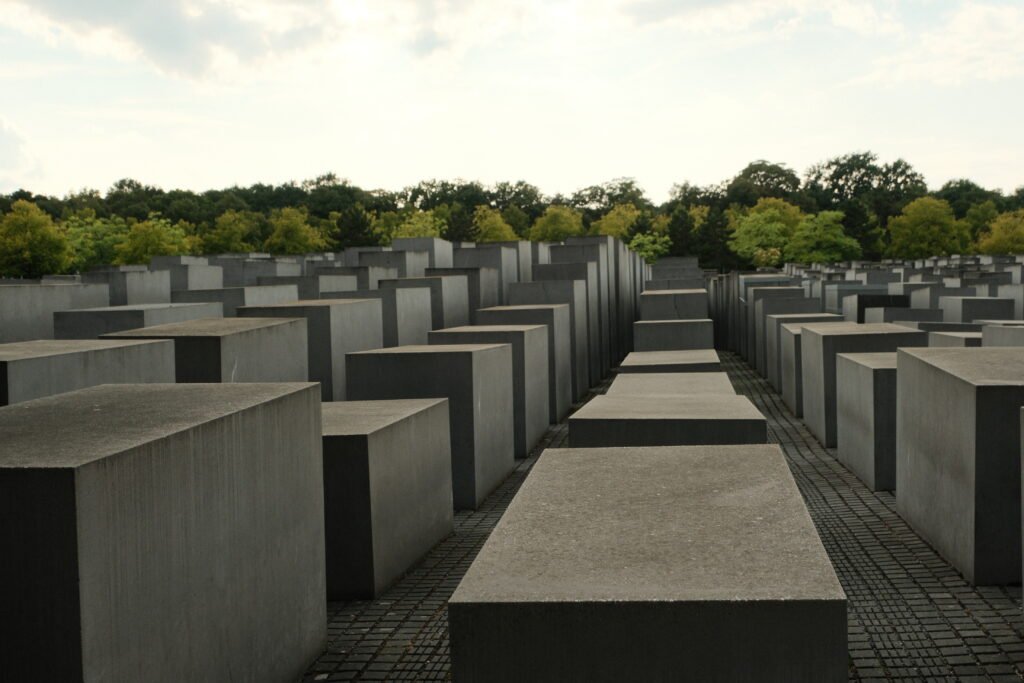
Above ground, 2,711 concrete blocks of different heights cover a huge area beside the Brandenburg Gate. There is no single prescribed meaning behind them, which is part of what makes the memorial so powerful. As you walk further in, the ground drops, the blocks become taller and the city around you slowly disappears.
It feels disorientating, quiet and surprisingly isolated, even when other visitors are around. The memorial does not explain itself or tell you what to feel; it simply gives you the space to walk through it and reflect.
The memorial was designed by architect Peter Eisenman and opened in 2005. It is dedicated to the six million Jewish victims of the Holocaust.
Underneath is the Place of Information, a free museum and exhibition space that explores the persecution and murder of European Jews under the Nazi regime. It focuses on individual letters, diaries, family stories and the places across Europe where persecution and extermination happened.
It is a very moving visit, particularly because it takes the scale of the Holocaust and brings it back to individual lives. When we visited, the information centre closed at 5.15pm, earlier than the outdoor memorial, so make sure you leave enough time if you want to visit both.
🏛️ Brandenburg Gate, Unter den Linden and the Reichstag
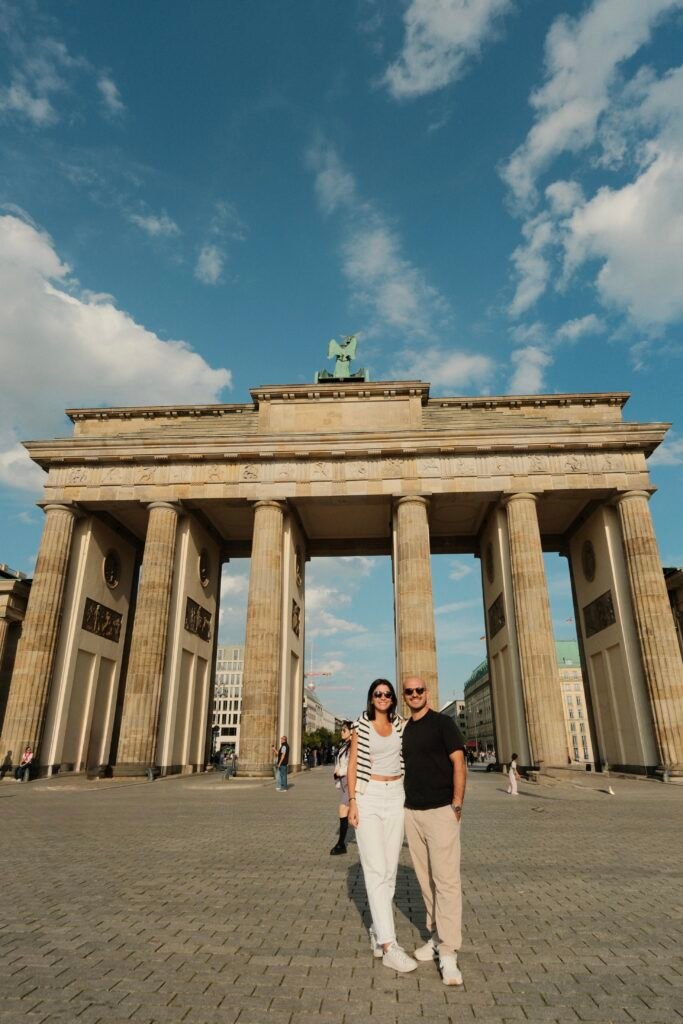
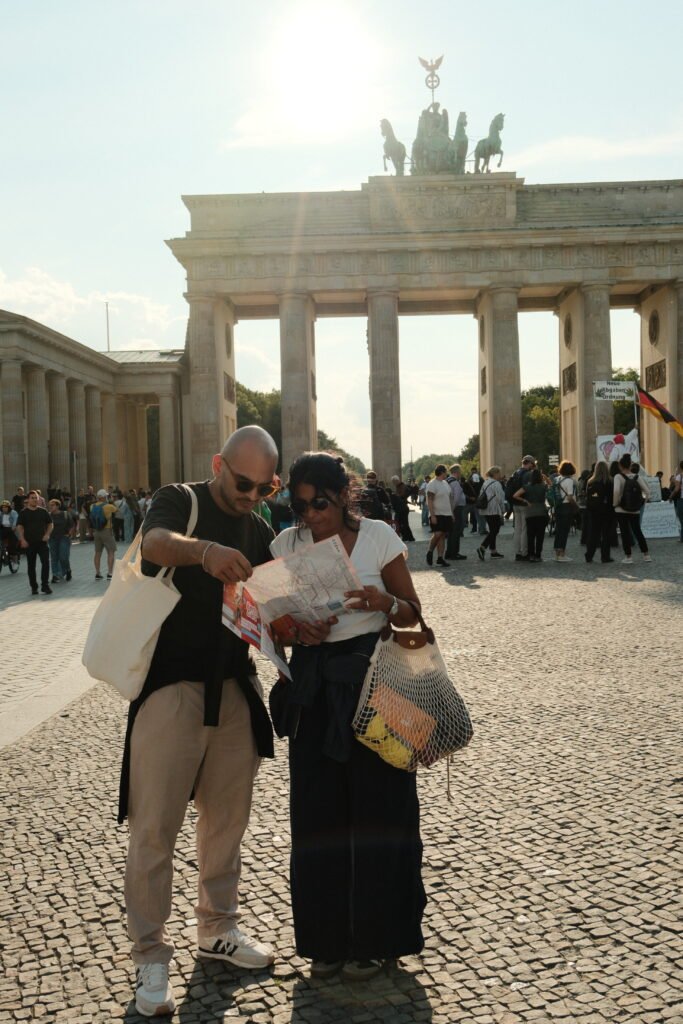
We continued to the Brandenburg Gate, Berlin’s most recognisable landmark.
Originally built in the late 18th century as one of the gates into the city, it later became a symbol of division because it stood in the restricted border area during the Cold War. After the fall of the Wall, it became a symbol of reunification.
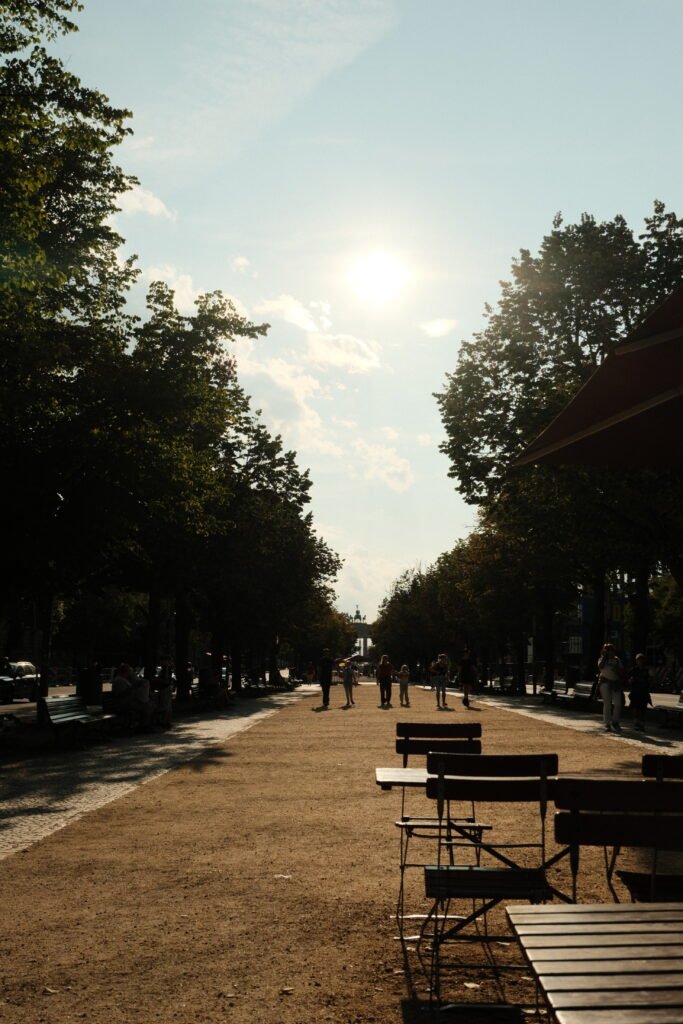
From the gate, we walked along Unter den Linden, the grand avenue leading towards the historic centre, and stopped for a coffee.
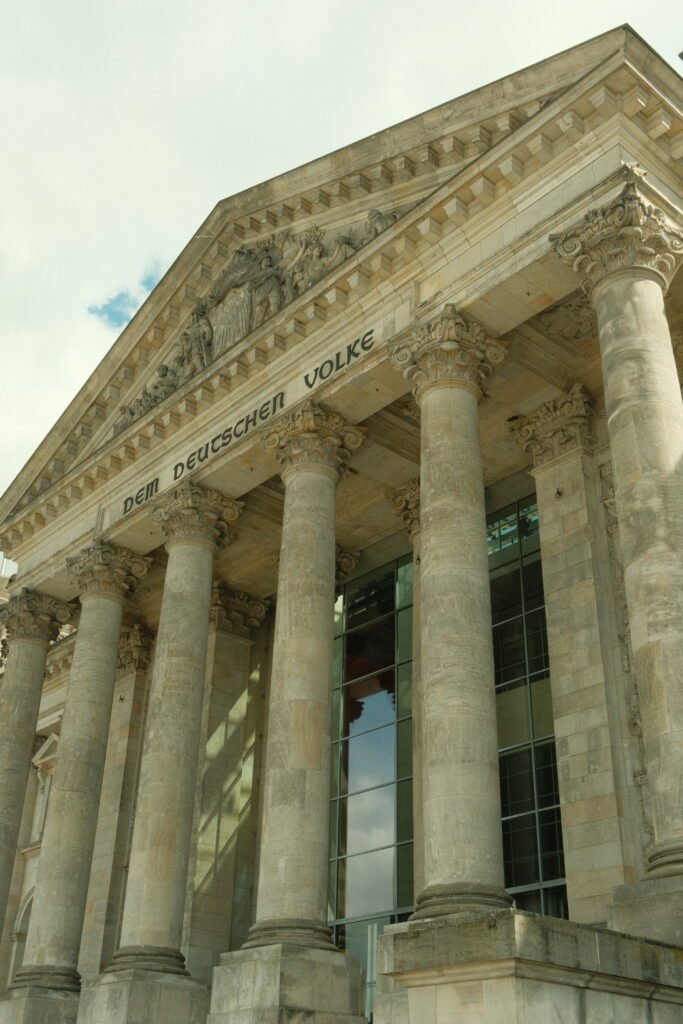
The Reichstag building is right beside the Brandenburg Gate. This is where the German parliament, the Bundestag, sits today. The building itself has had a dramatic history: it was damaged by fire in 1933, badly affected during the Second World War and later redesigned after reunification.
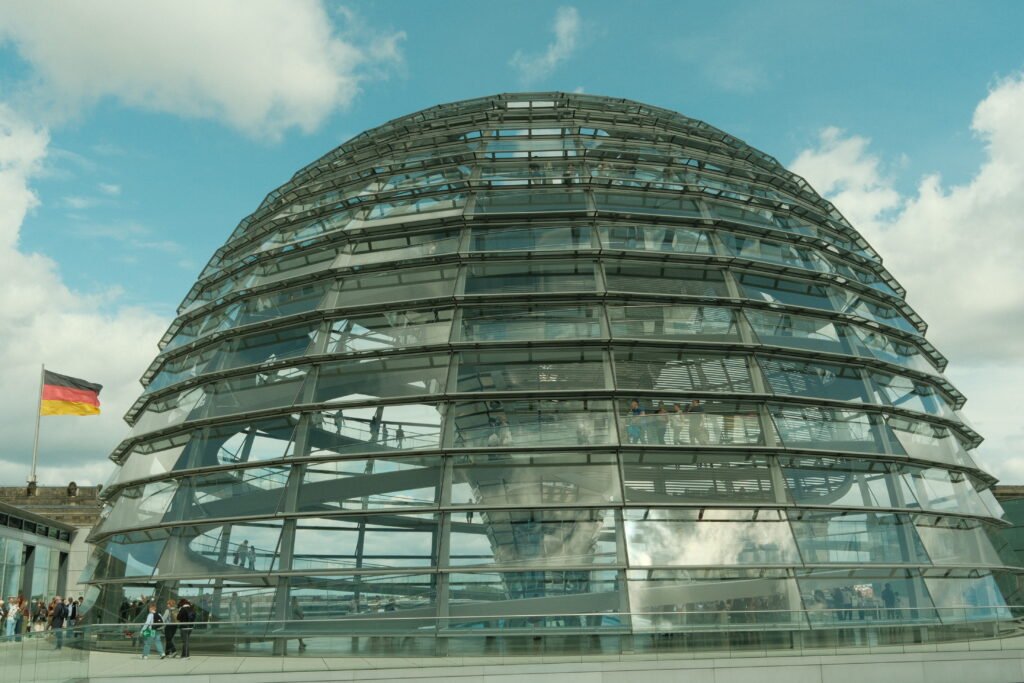
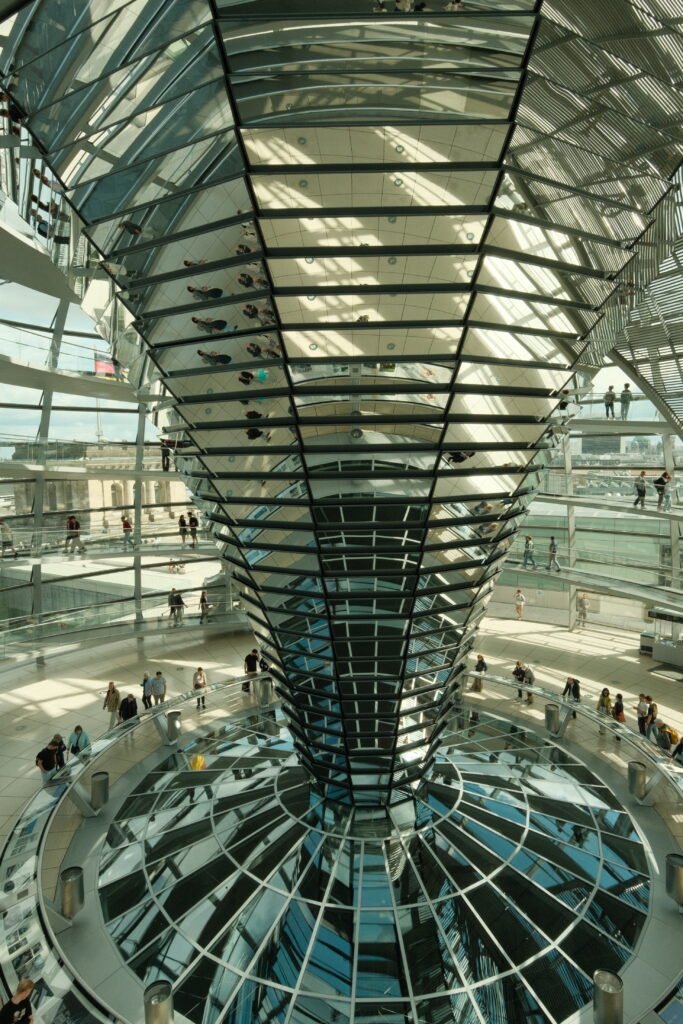
Its glass dome, designed by Norman Foster, is meant to represent transparency in modern German democracy. Visitors can walk up through the dome while looking down into the parliamentary chamber below.
We had reserved our visit for our final day, so we only saw it from outside at this point. Make sure you book your free visit in advance through the official Bundestag website.
🌳 Tiergarten and the Victory Column
By then we were tired, so we took an Uber back to Schöneberg. It cost €13 in total.
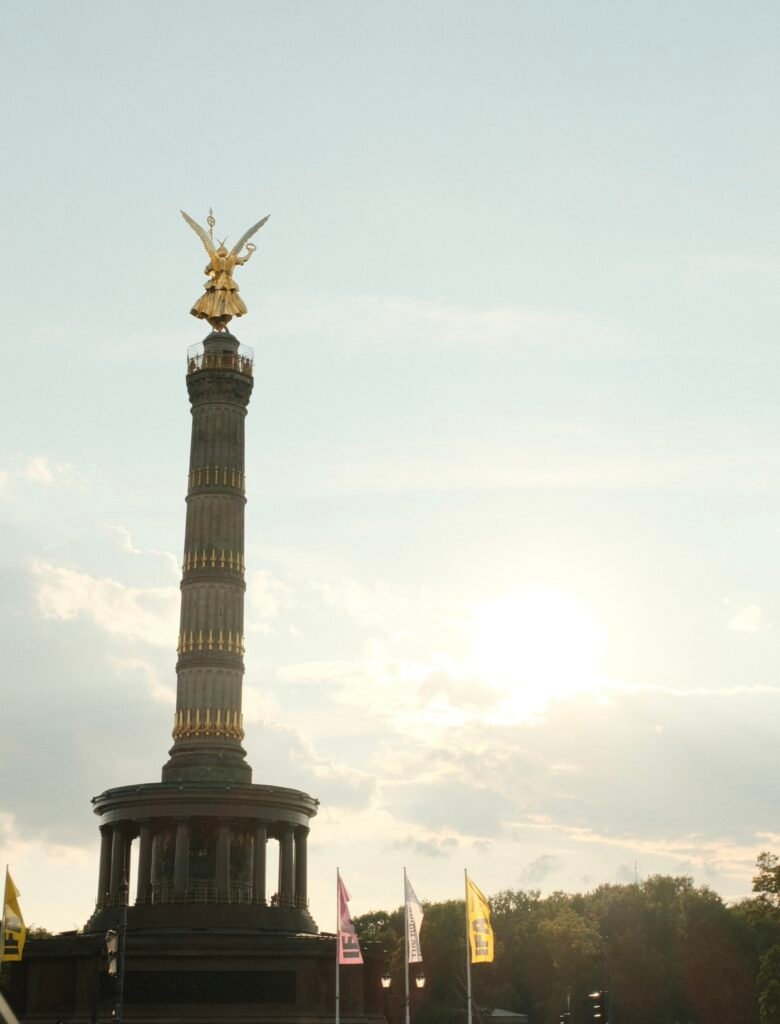
The drive took us through Tiergarten, Berlin’s enormous central park, and past the Victory Column. The tall column was built in the 19th century to commemorate Prussian military victories, and the golden statue at the top is often nicknamed Golden Else by Berliners.
After more than 17,500 steps, we kept dinner easy and ate at the hostel.
2️⃣ Day 2: Friedrichshain, Street Art and the East Side Gallery
Our second day showed us a completely different side of Berlin: former East Berlin, socialist architecture, street art, creative spaces and the Wall.
If Day 1 was about understanding Berlin’s darkest history, Day 2 felt more colourful, spontaneous and lived-in.
🏙️ Frankfurter Tor and Karl-Marx-Allee
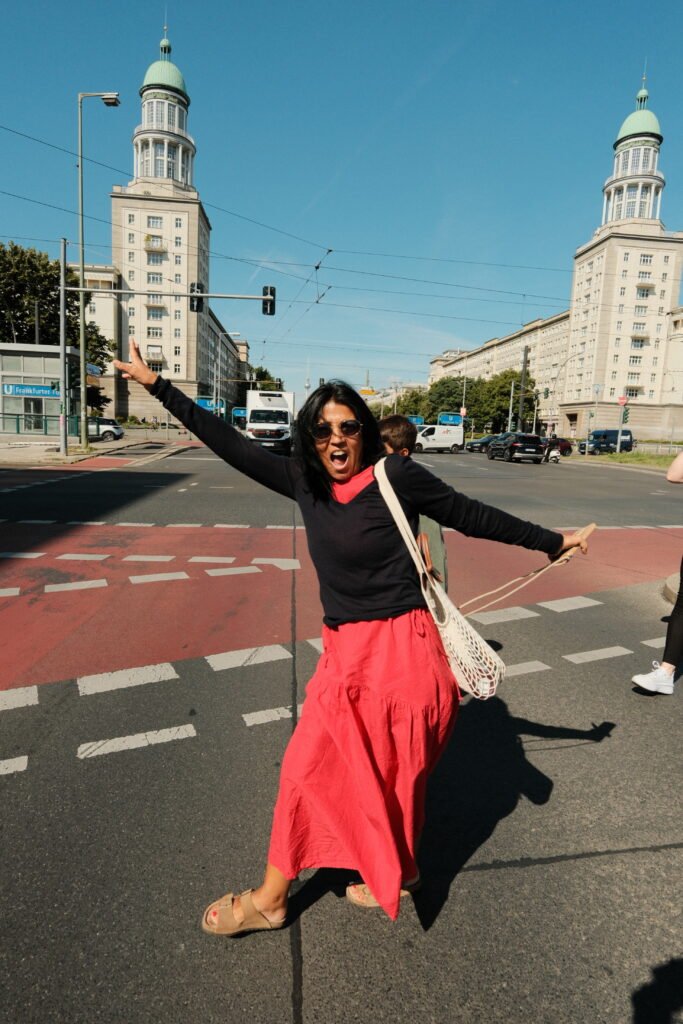
We took an Uber from Schöneberg to Frankfurter Tor in Friedrichshain, which cost €22 in total. You can also reach it easily by public transport on the U5 line.
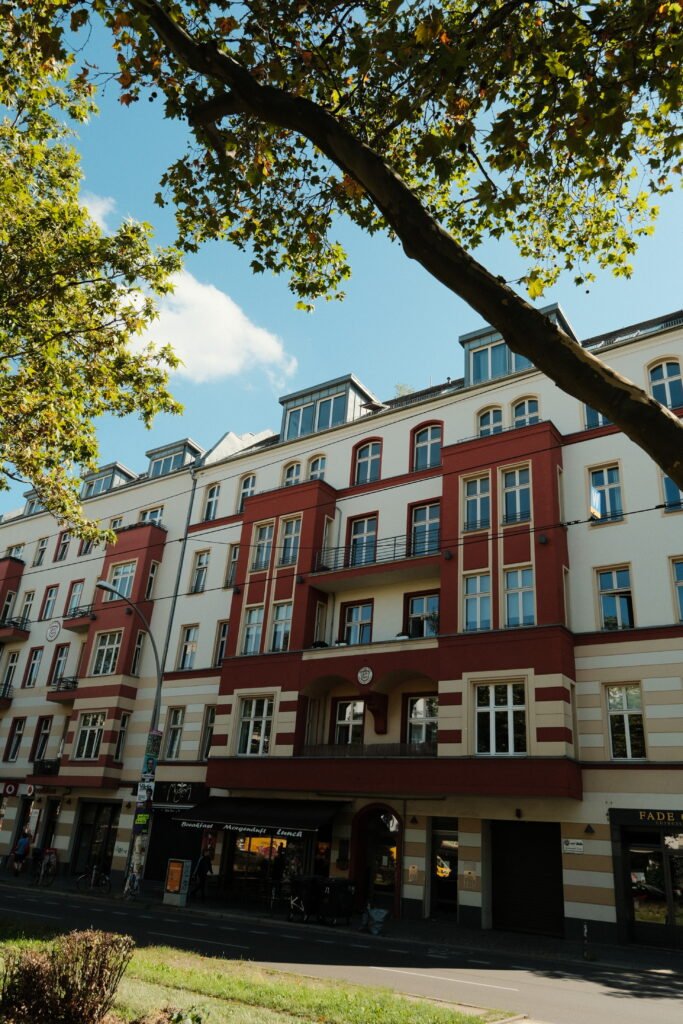
Frankfurter Tor is the grand gateway at the eastern end of Karl-Marx-Allee, a huge boulevard built in East Berlin after the Second World War. Its two striking towers and monumental apartment blocks were part of a vision for socialist East Berlin: homes for workers designed to look like palaces.
The avenue was originally called Stalinallee, and the architecture still feels very different from the rest of the city. It is imposing, slightly surreal and worth seeing even if you are not especially interested in architecture.
🎨 RAW-Gelände
From Frankfurter Tor, we slowly made our way towards RAW-Gelände.
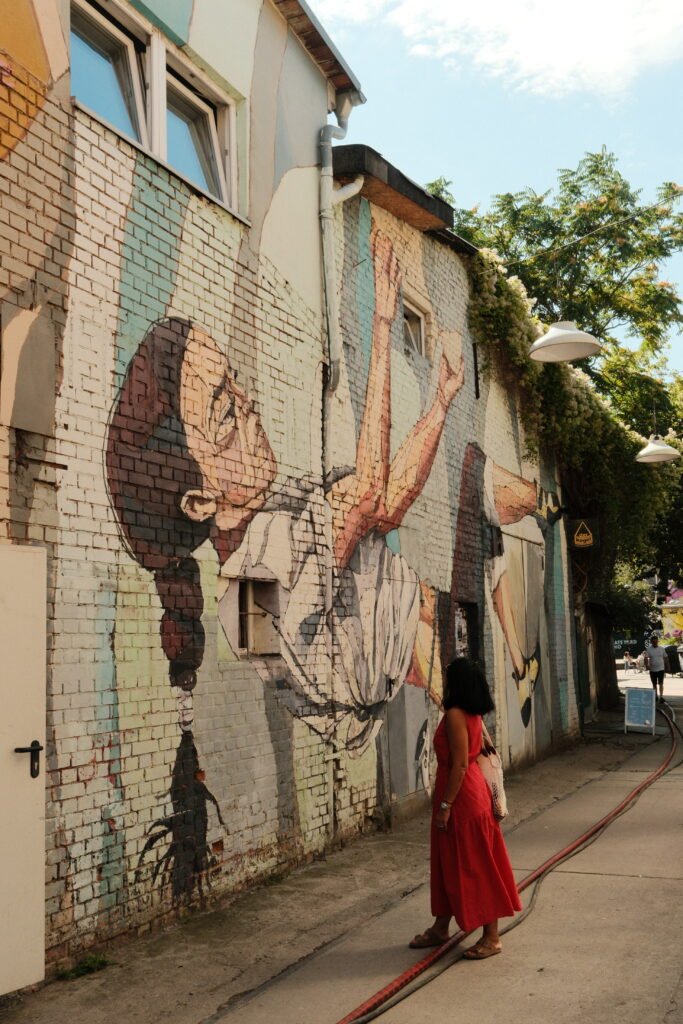
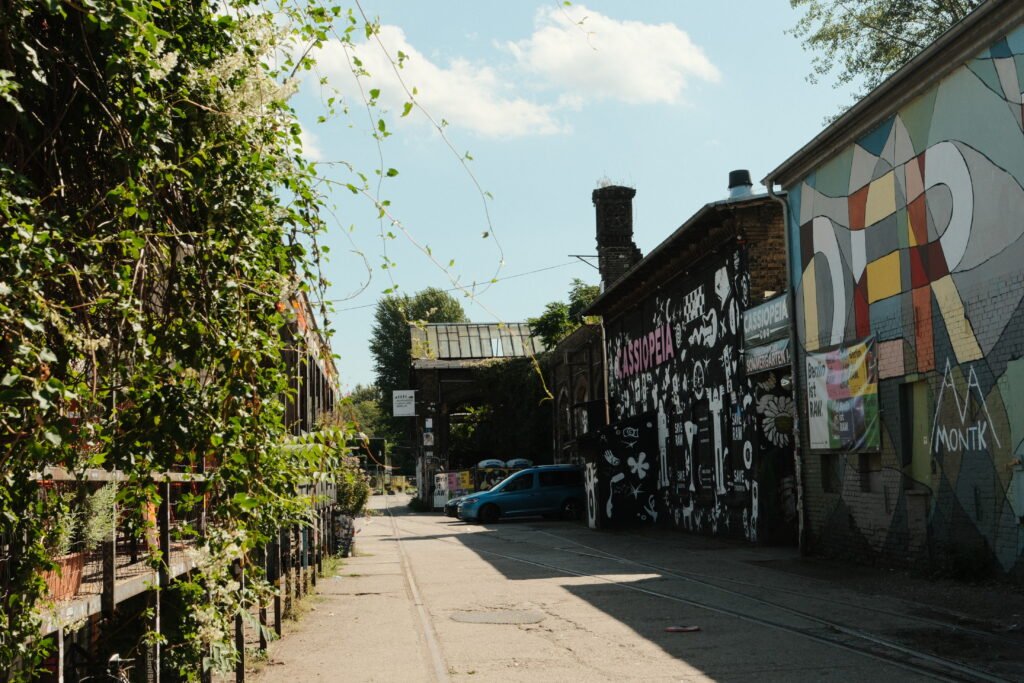
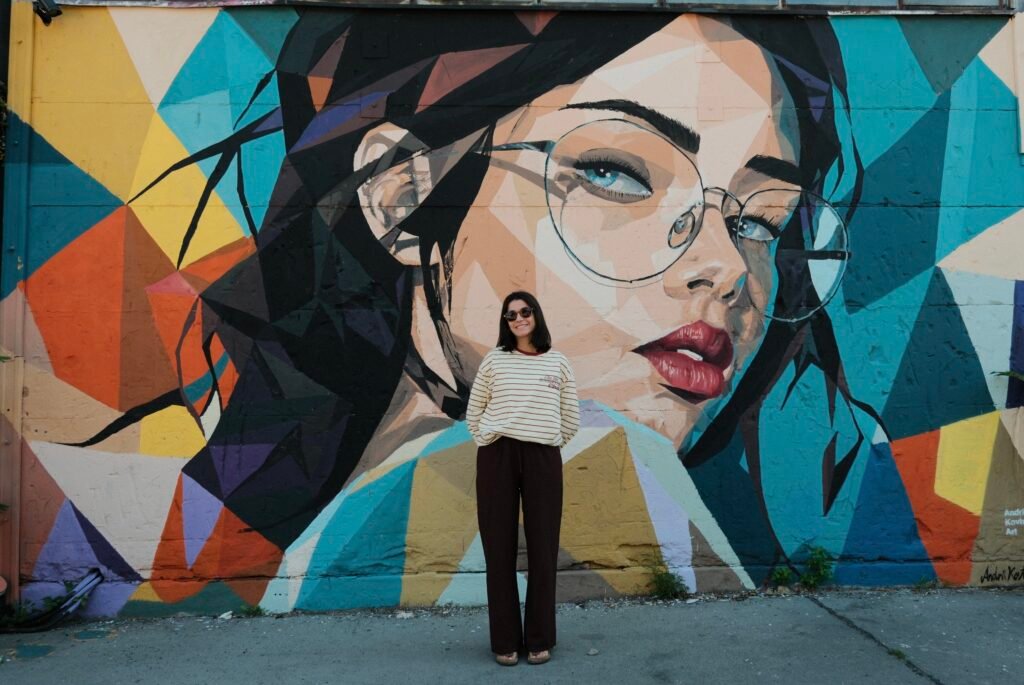
This former railway repair yard has become one of Berlin’s most creative and alternative spaces. It is full of graffiti, small bars, studios, food spots and unexpected corners.
We stopped for coffee, wandered around looking at the street art and found a tiny disco inside what looked like an old telephone booth. It is not a major attraction, but it was a funny little detail and exactly the kind of thing that makes Berlin feel different from other European cities.
🍽️ Schnitzel near Oberbaumbrücke
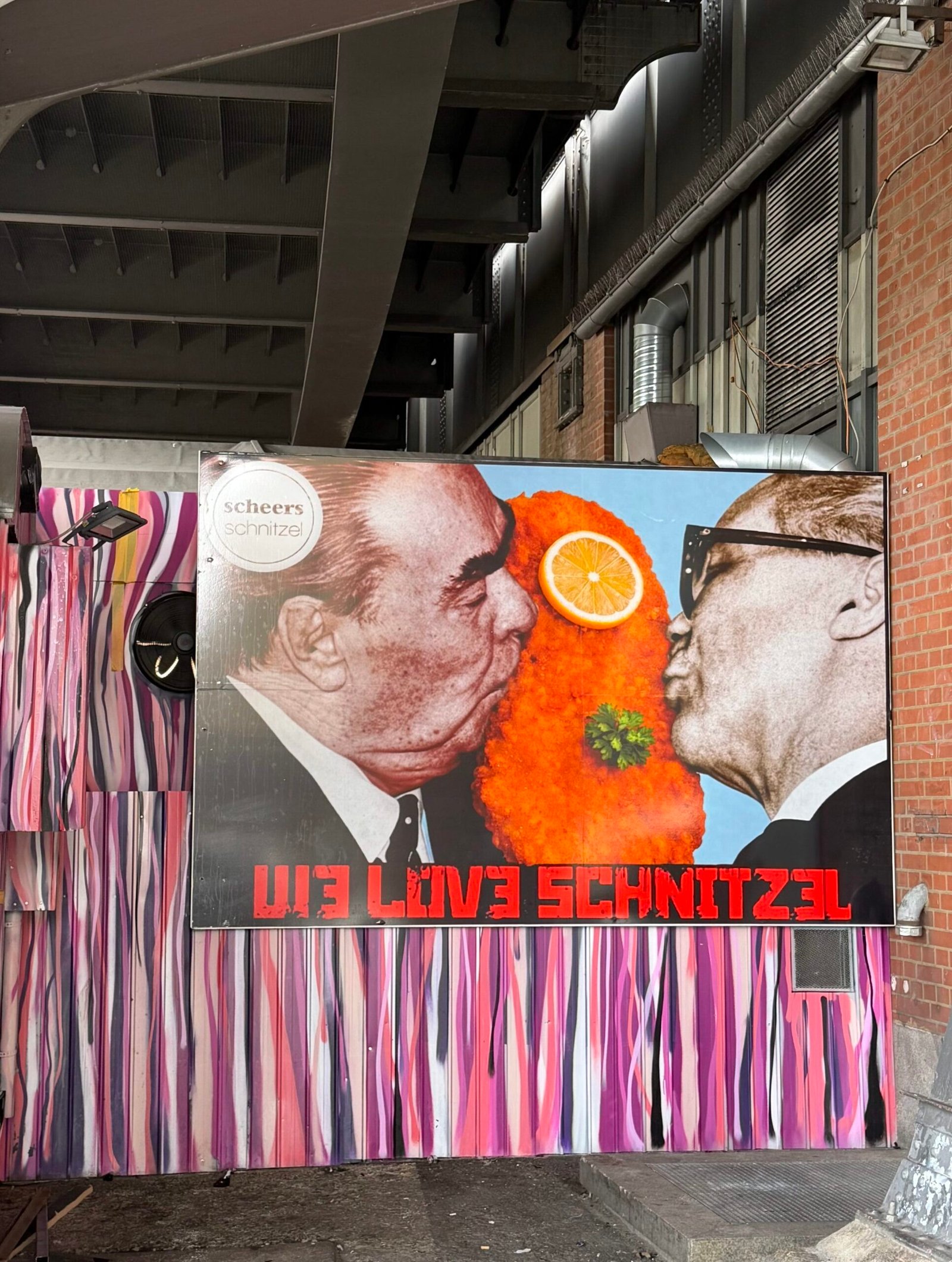
For lunch, we went to Scheers Schnitzel, under the arches near Oberbaumbrücke. We paid around €13.70 per person.
It was a comforting, easy meal before an afternoon of walking. Sometimes, when you are travelling, a good schnitzel is exactly what you need.
🌉 Oberbaumbrücke
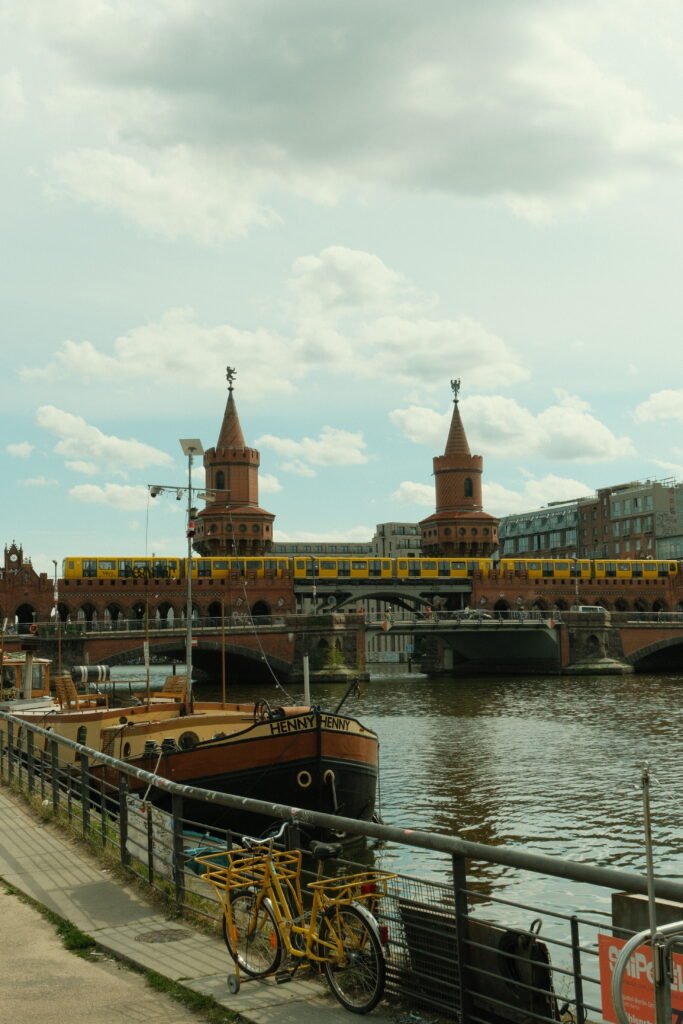
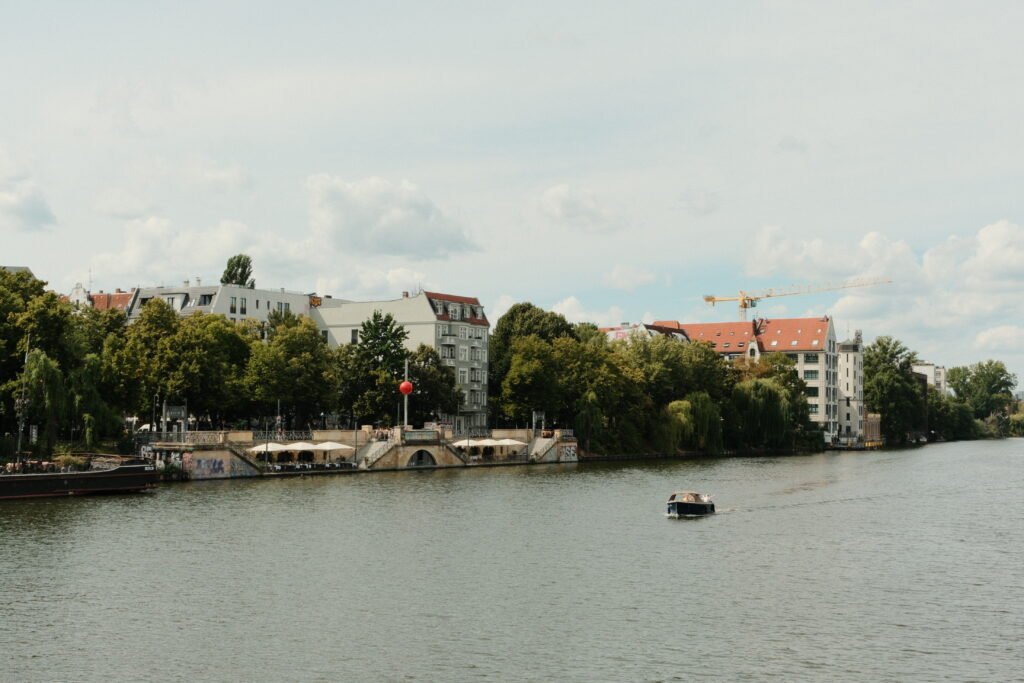
Next, we walked to Oberbaumbrücke, one of Berlin’s most beautiful bridges.
It crosses the River Spree and connects Friedrichshain and Kreuzberg. During the years when Berlin was divided, Friedrichshain was in East Berlin and Kreuzberg was in West Berlin, making the bridge a symbolic border between two very different parts of the city.
Today, it represents the opposite: the reconnection of those neighbourhoods after reunification. It carries cars, pedestrians, cyclists and the yellow U-Bahn train, and it is one of those places that looks particularly beautiful from a distance.
From here, we continued towards the East Side Gallery.
🖼️ East Side Gallery
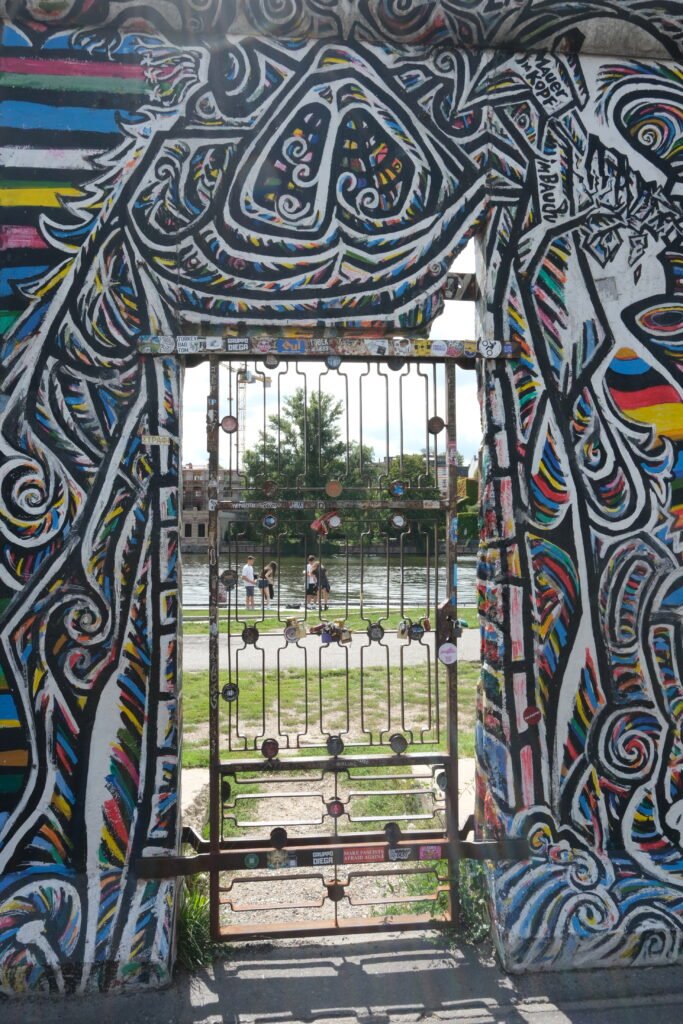
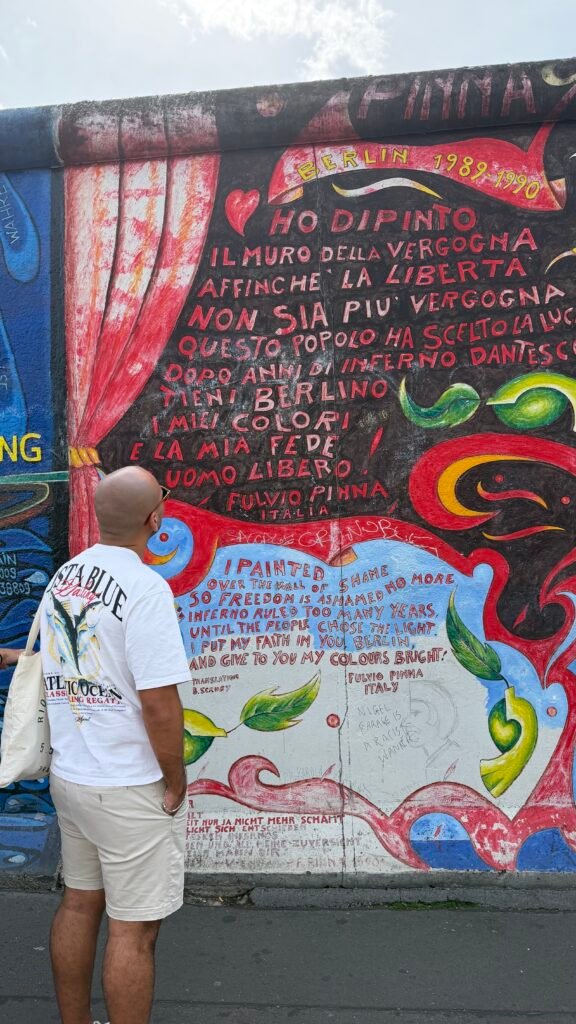
The East Side Gallery is the longest remaining section of the Berlin Wall, stretching for around 1.3 kilometres along the River Spree.
The Wall fell in November 1989, and soon afterwards artists from around the world painted murals on its eastern side. Their work responded to the political changes of 1989 and 1990, with messages about freedom, hope, fear, unity and the end of division.
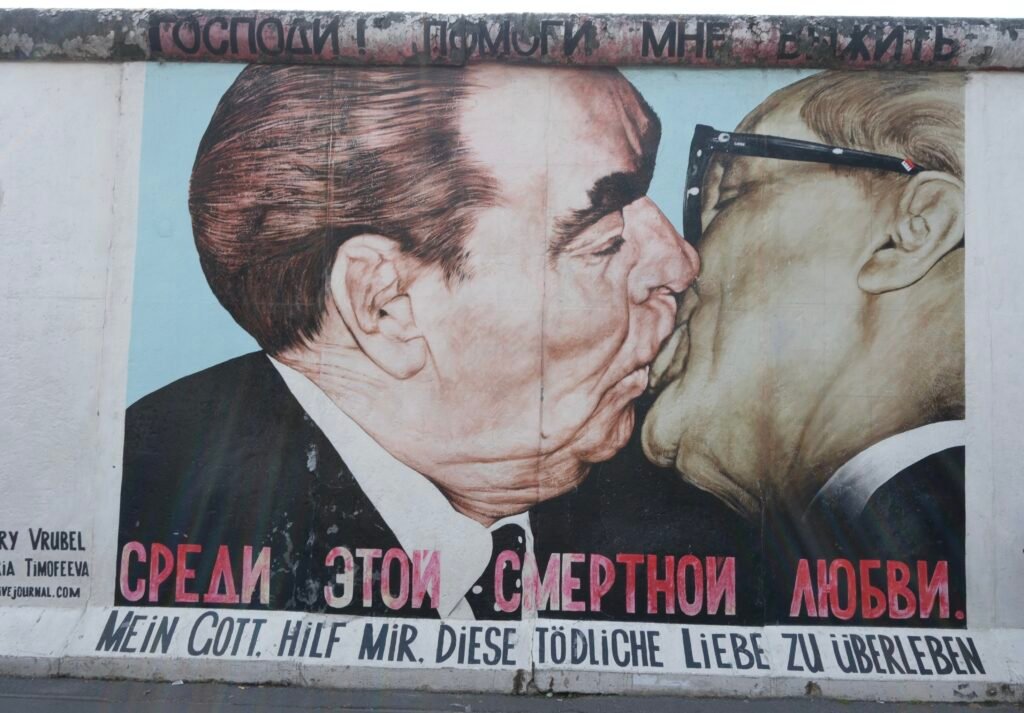
It is free to visit and easy to explore at your own pace. Some paintings are instantly recognisable, including the famous image of Soviet leader Leonid Brezhnev and East German leader Erich Honecker kissing, and the Trabant car appearing to break through the Wall.
Even if you do not know the story behind every mural, walking alongside it makes Berlin’s recent past feel much more real. It is easy to forget how recently the city was divided until you are standing beside the physical Wall itself.
🍦 A Slower Afternoon in Kreuzberg
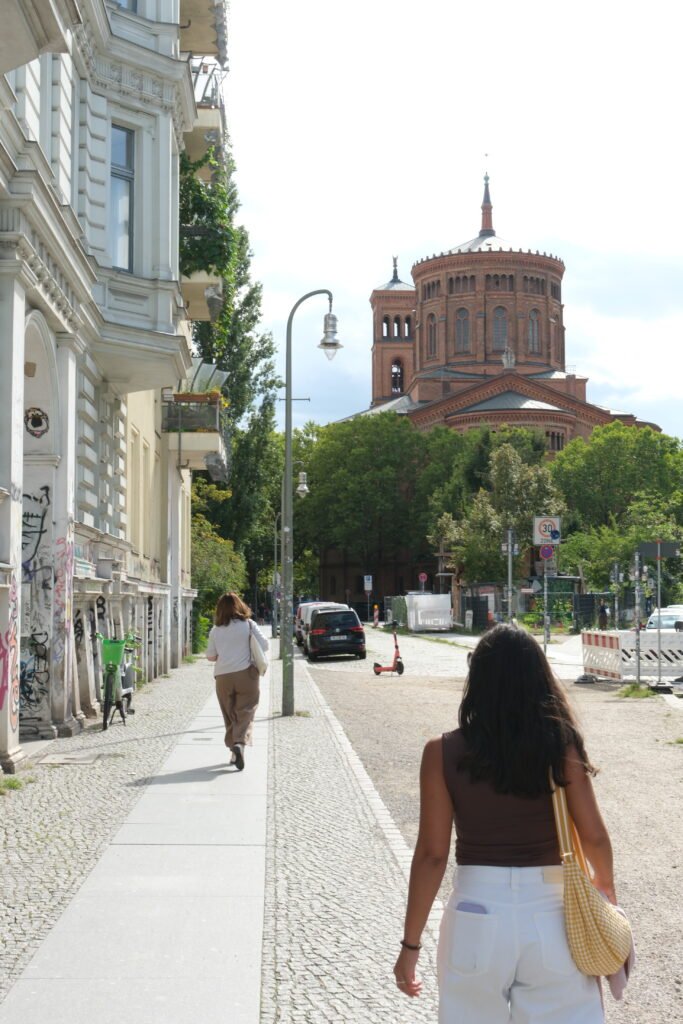
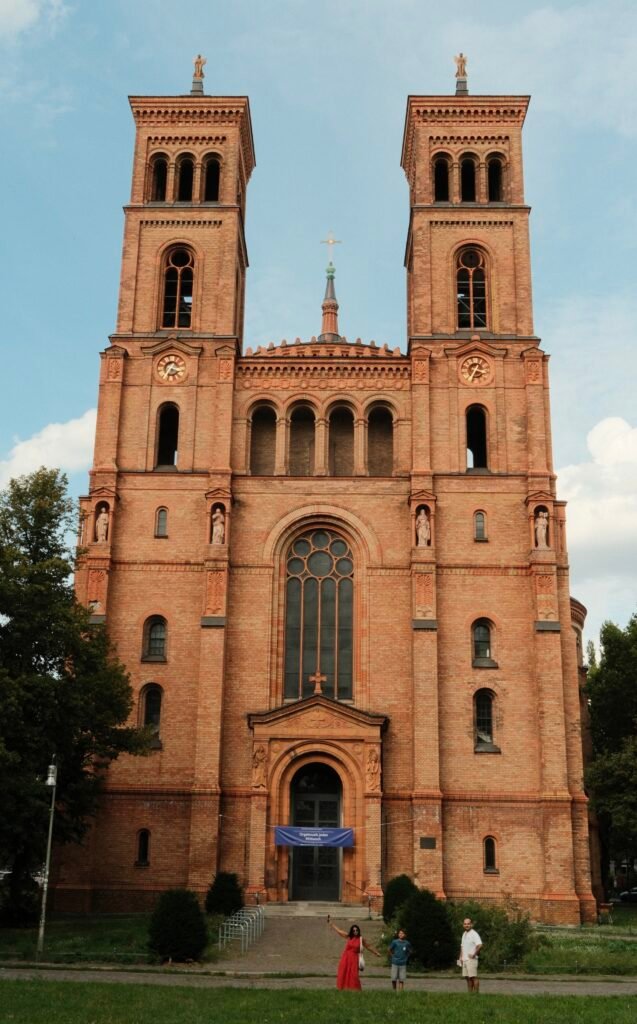
After the East Side Gallery, we walked towards the garden beside St. Thomas Church and took a slower break from sightseeing.
We had ice cream at Kunst Raum Kreuzberg, sat in the park for a while and enjoyed having no strict plan. We also passed the large astronaut mural nearby.
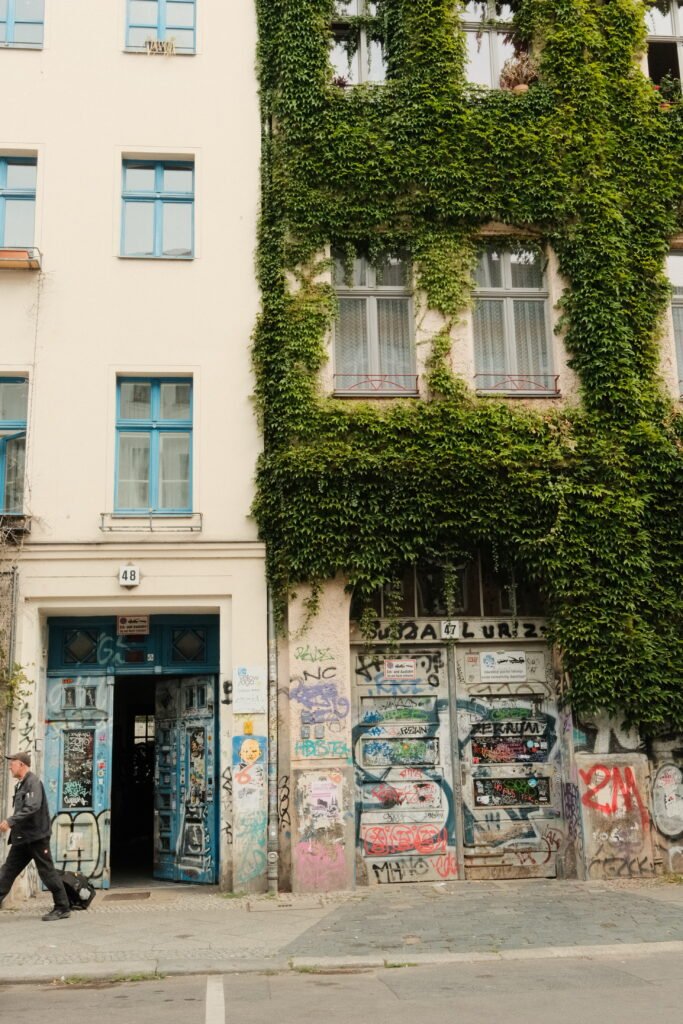
This area is full of little shops, cafés, street art and places that are worth finding without following a perfect route. Our advice is simply to keep walking, look up occasionally and leave some room for whatever catches your attention.
We then took an Uber back to Schöneberg and had dinner near our hostel on Hauptstraße, where there are plenty of restaurants to choose from.
We walked more than 18,700 steps that day.
3️⃣ Day 3: The Reichstag, Museum Island and Historic Berlin
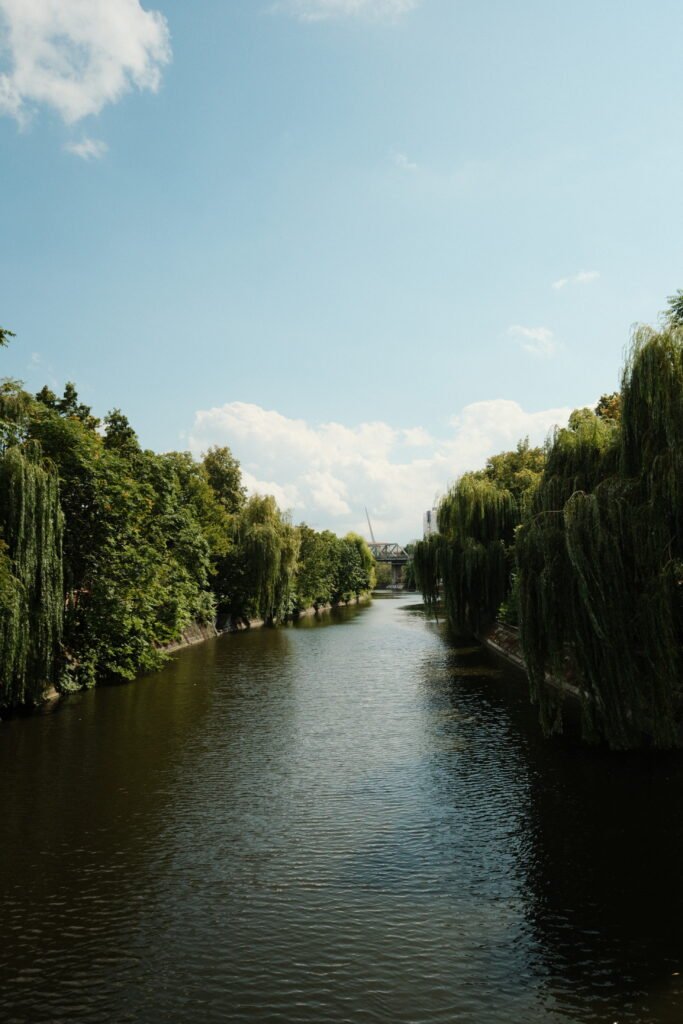
Our final day took us back into central Berlin, this time to see the Reichstag from inside, walk along the River Spree and explore some of the city’s most important museums, memorials and historic buildings.
🏛️ Visit the Reichstag Dome
We had a 10am reservation for the Reichstag dome.
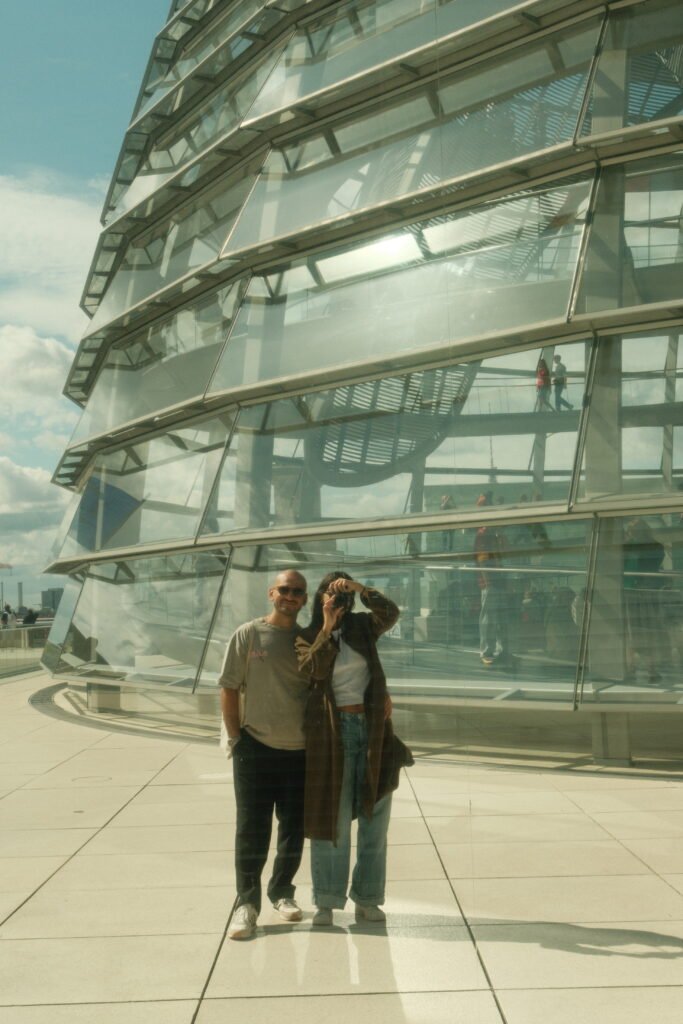
The visit is free, but you need to book it in advance and bring identification. It was an interesting way to see the building after passing it on our first day and learning about its role in German history.
At the entrance to the dome, you can pick up a free panoramic map. It helps you identify the main buildings around the city. Once inside, you walk up through the glass dome, which gives views across Berlin while also looking down into the parliamentary chamber below.
The free audio guide explains the buildings you can see from the dome, while also giving context about the Reichstag’s history and the work of the Bundestag.
It is not a long visit, but it is a meaningful one. The modern glass dome above the German parliament feels like a deliberate contrast to the building’s past.
🚉 Palace of Tears
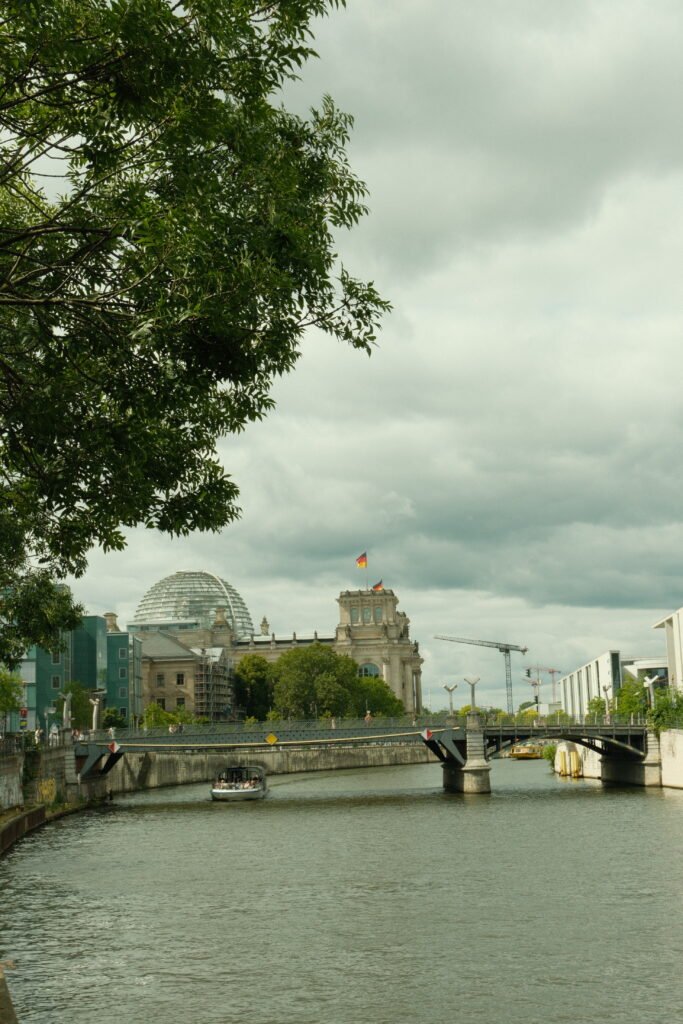
Afterwards, we walked along the River Spree and visited the Palace of Tears, or Tränenpalast, beside Friedrichstraße station.
This small museum is inside the former departure hall used by people leaving East Berlin for West Berlin during the Cold War. It became known as the Palace of Tears because it was where East Germans said goodbye to friends and relatives from the West, often without knowing when they would see each other again.
Inside, there are original objects, documents, photographs and personal stories explaining what it was like to cross the border, apply for permission to travel or be separated from family by the Wall.
Entry is free, and it is a very human, personal complement to the larger museums and memorials from Day 1. The visit only takes around 20 minutes, so if you are already around Friedrichstraße or Museum Island, it is well worth stopping by.
🍽️ Lunch at Treffpunkt Berlin
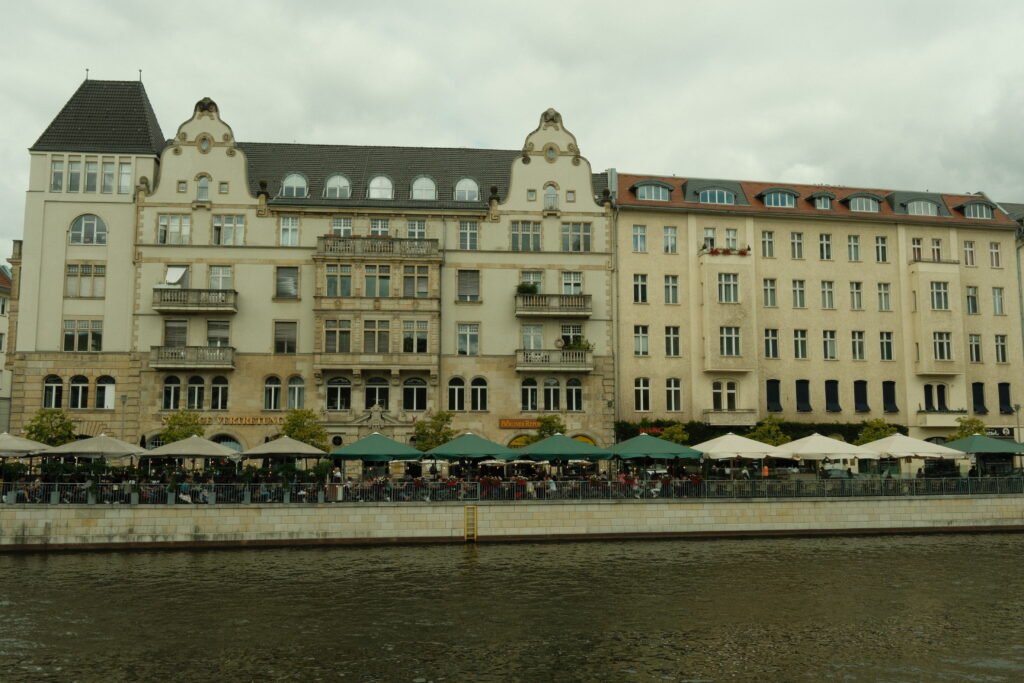
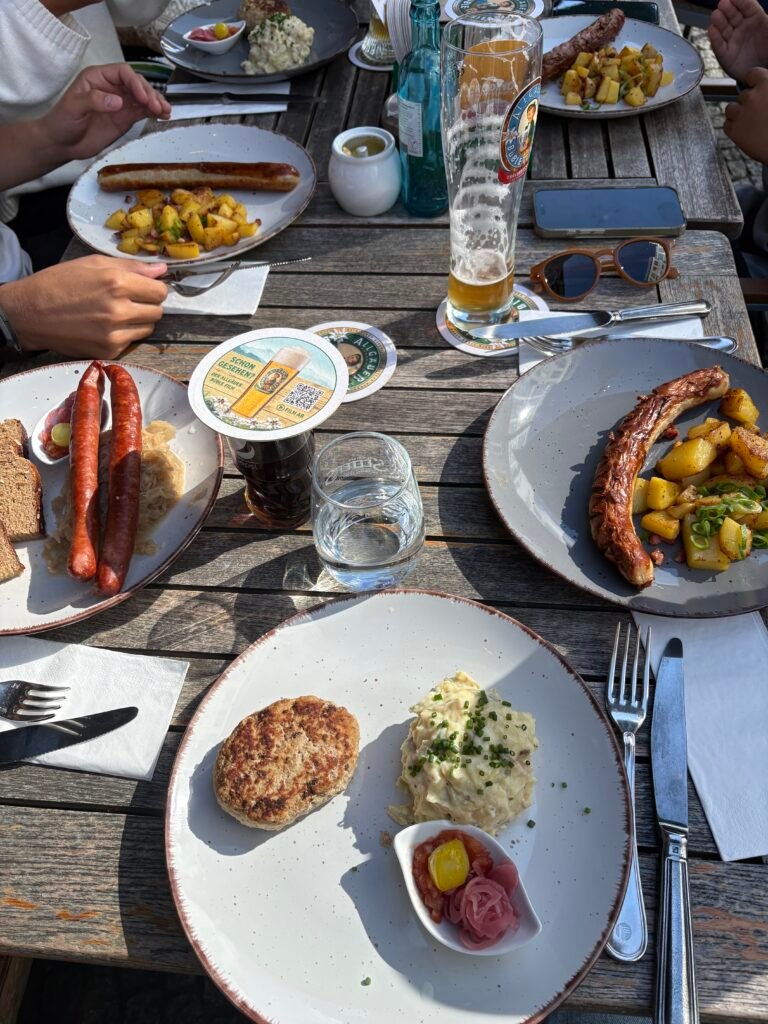
For lunch, we ate at Treffpunkt Berlin, where we ordered sausages and meatballs. Everything was delicious, and we paid around €19.20 per person.
It was a proper German lunch and a good break before continuing with the afternoon.
📖 Bebelplatz, St. Hedwig’s Cathedral and Neue Wache
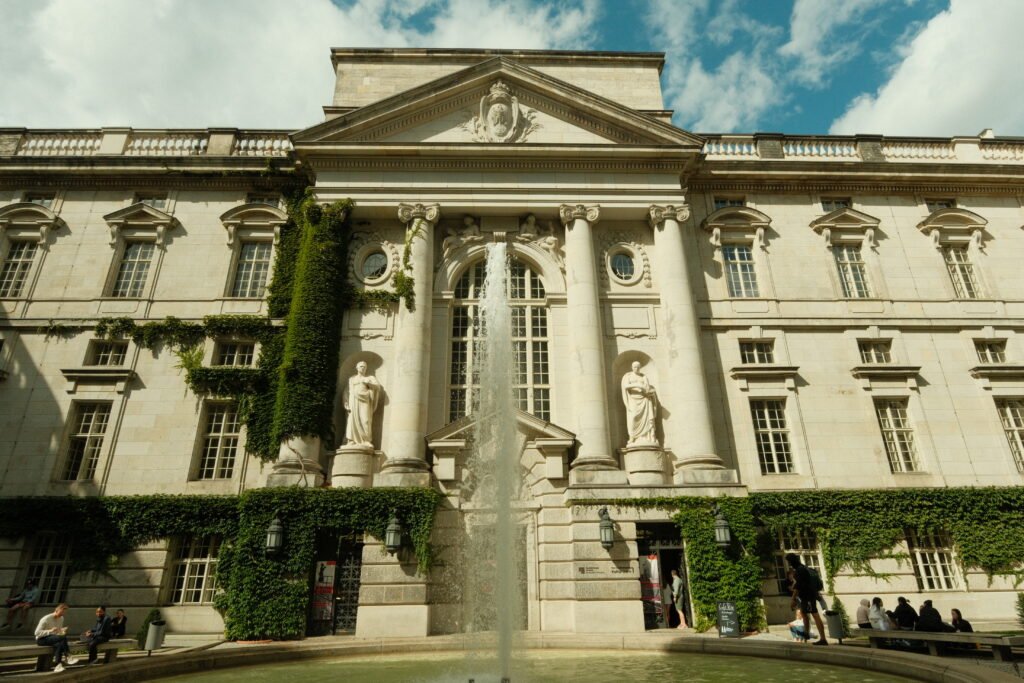
We then continued to Bebelplatz, one of Berlin’s most beautiful squares, surrounded by major buildings including the State Opera, the Old Library and St. Hedwig’s Cathedral.
But it is also the site of one of the darkest moments in the city’s history. On 10 May 1933, Nazi students burned thousands of books here, including works by Jewish writers, political opponents and authors considered “un-German” by the regime.
In the ground, there is a memorial by artist Micha Ullman: an underground room filled with empty bookshelves, visible through a glass panel in the square. It is easy to miss if you do not know it is there, so make sure you look down.
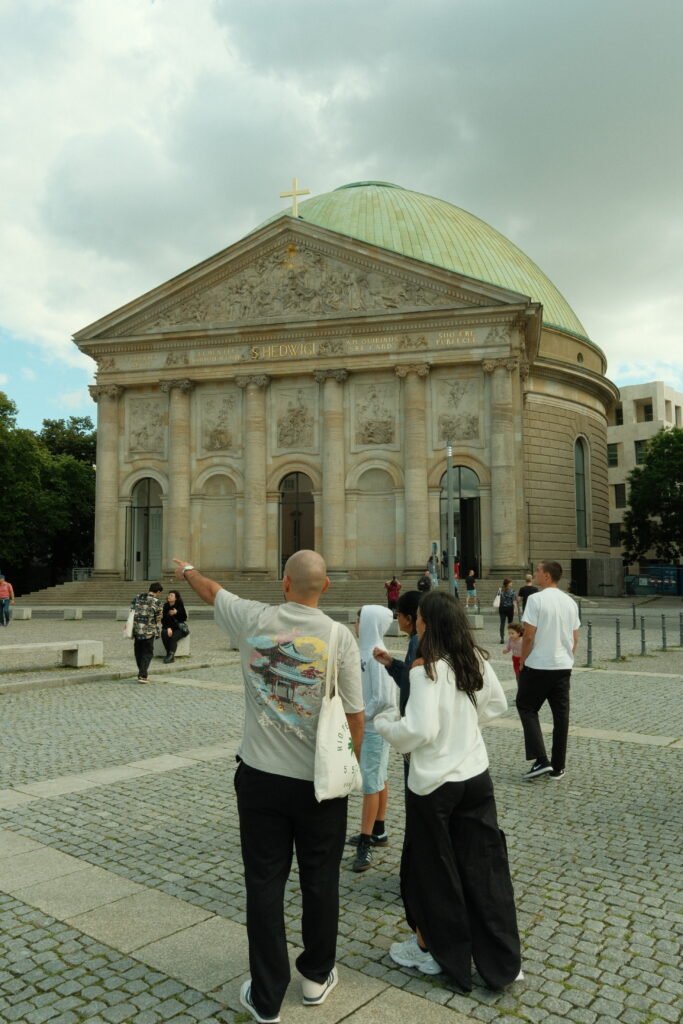
We also passed St. Hedwig’s Cathedral, the Roman Catholic cathedral of Berlin, recognisable for its large dome.
Nearby is Neue Wache, Germany’s central memorial to the victims of war and dictatorship. Inside the quiet, almost empty building is Käthe Kollwitz’s sculpture Mother with her Dead Son.
The sculpture shows a mother holding her son after his death, and it represents grief, loss and the human cost of war. It is a simple place to visit, but one that stays with you.
🏛️ Museum Island and the Neues Museum
From there, we walked towards Museum Island, the group of major museums on an island in the River Spree.
You do not need to enter a museum to enjoy this area. Even just walking around the island is beautiful, especially with the River Spree, the historic buildings and Berlin Cathedral all around you.
If you have time and enjoy museums, though, this is where you will find some of Berlin’s most important collections.
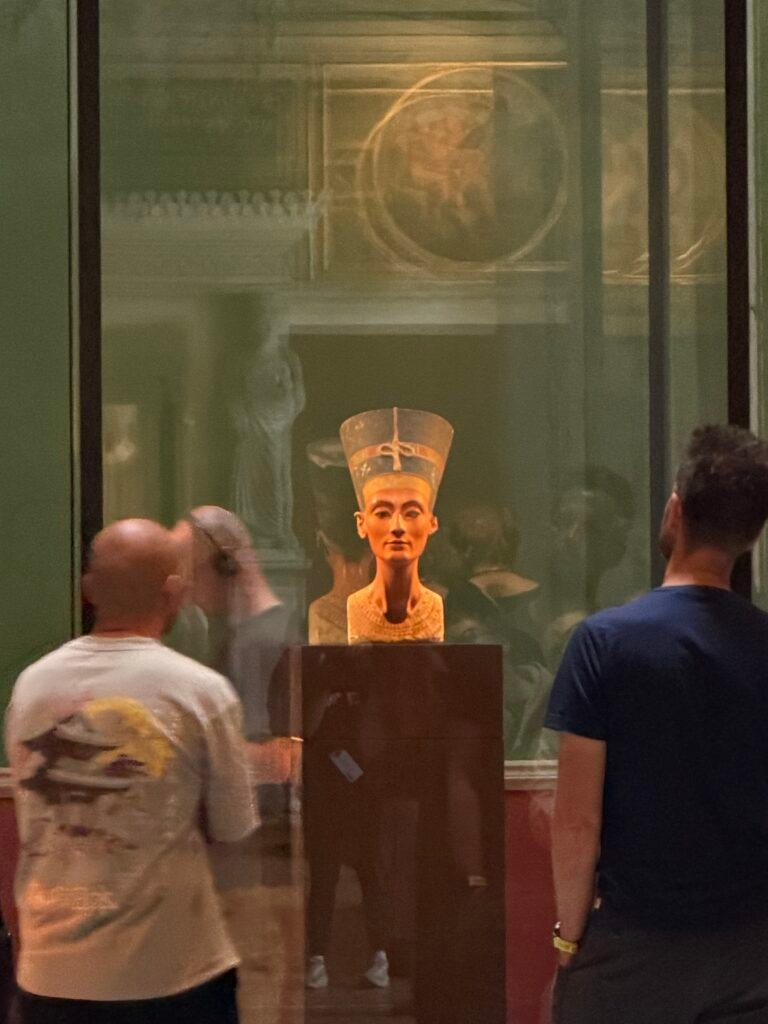
We chose the Neues Museum because we wanted to see the bust of Nefertiti.
Nefertiti was an Egyptian queen and the wife of Pharaoh Akhenaten. Her painted limestone bust, created around 1340 BC, was discovered at Amarna in Egypt in 1912 and is now one of the most famous works of ancient Egyptian art in the world.
We were especially excited to see it because Egypt was the next destination on our travel list. Seeing Nefertiti in Berlin made us even more curious about the country and its history.
The bust’s route to Berlin is also controversial. It was taken to Germany after the excavation under the division system used at the time, but Egypt has repeatedly challenged the fairness of that process and requested its return. It is a fascinating object, but also a reminder that museum collections can carry complicated histories.
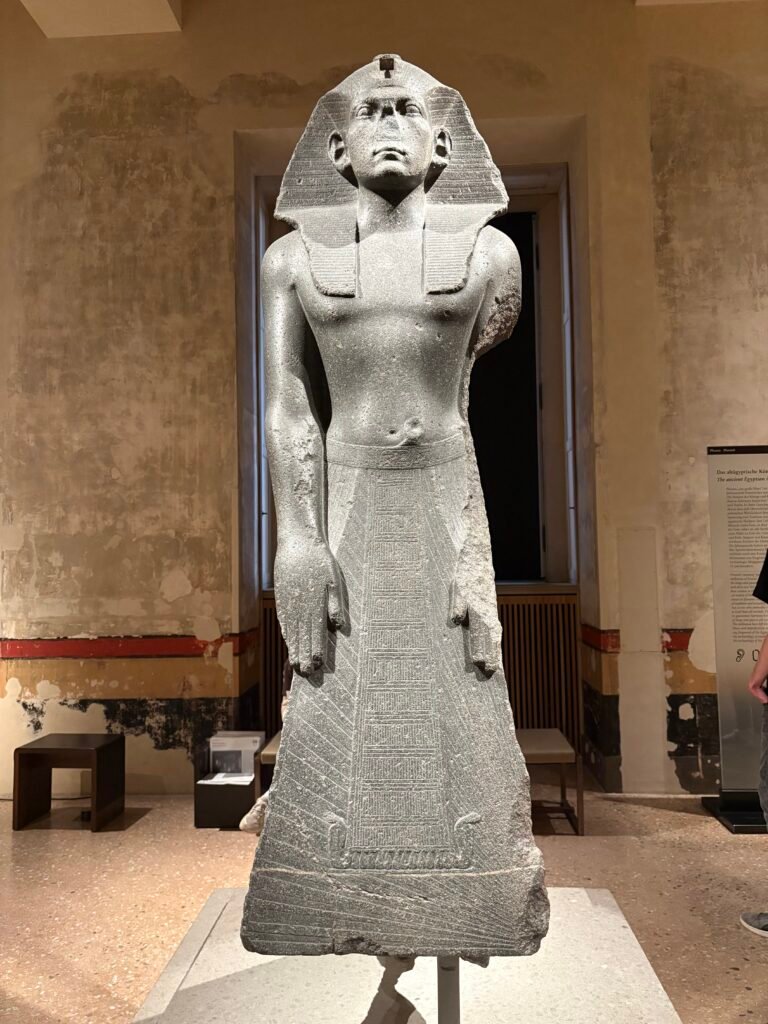
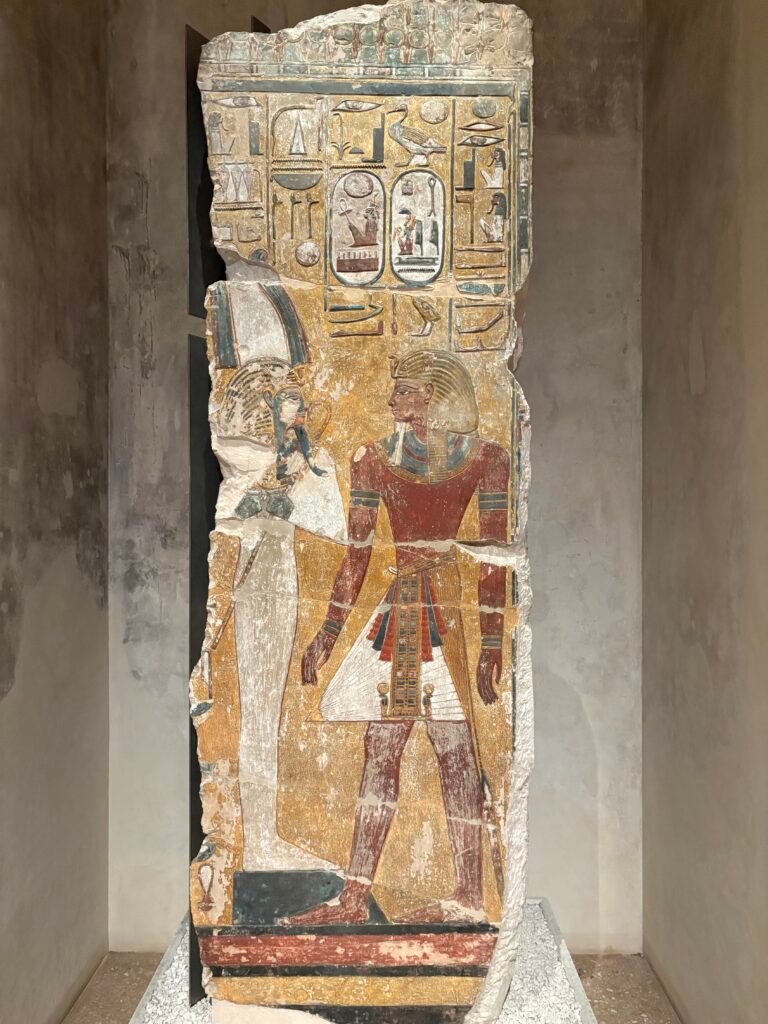
The Egyptian collection as a whole was much more impressive and extensive than we expected. It covers thousands of years of ancient Egyptian culture, as well as archaeology from other parts of Europe and the Mediterranean.
We paid €15 per person at the time of our visit. If you enjoy ancient history and only have time for one museum in Berlin, this would be our choice.
⛪ Berlin Cathedral
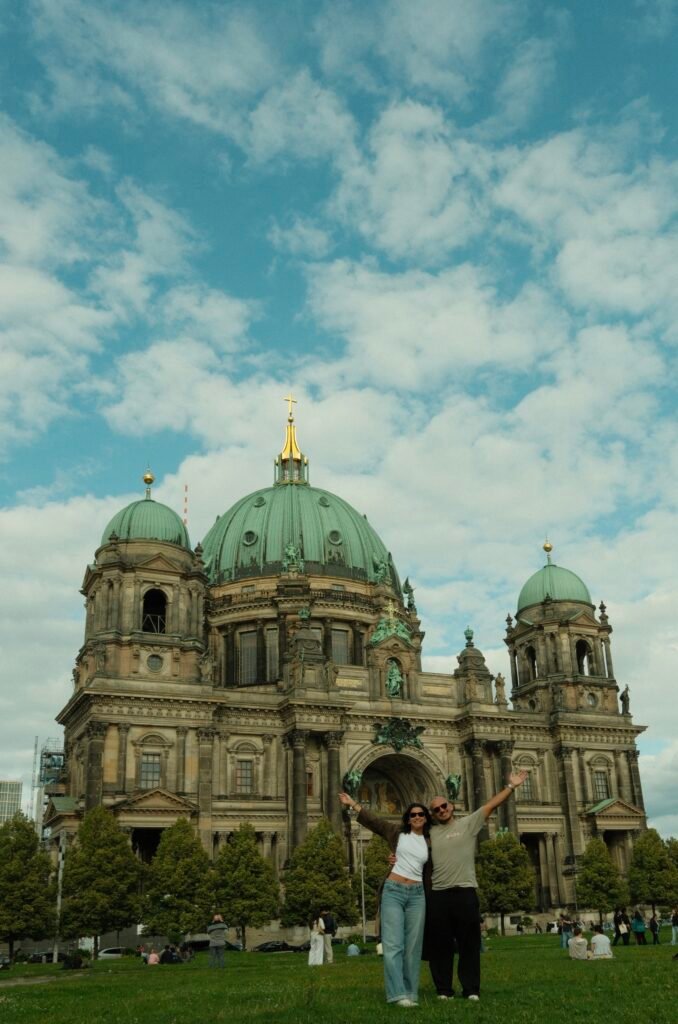
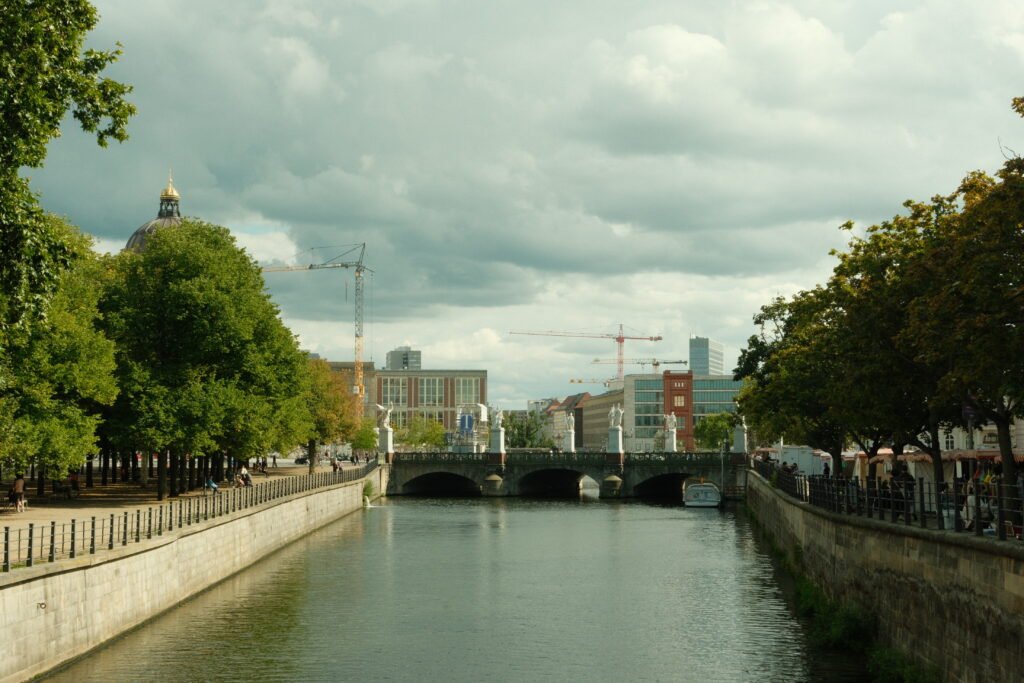
Berlin Cathedral is on Museum Island, beside a large historic garden and square called Lustgarten, and the River Spree.
With its enormous green dome, ornate façade and position beside the water, it is one of the most impressive buildings in the city. It was built as a grand Protestant church for the Hohenzollern dynasty, the former ruling family of Prussia and Germany.
Even if you do not go inside, it is worth walking around the outside and seeing it from different angles across the river.
🗼 Alexanderplatz and the Berlin TV Tower
After leaving Museum Island, we continued towards Alexanderplatz, where we passed the Berlin TV Tower, or Fernsehturm.
At 368 metres high, it is one of the tallest structures in Europe and one of Berlin’s most recognisable landmarks. It was built in the 1960s in East Berlin and was intended to be a visible symbol of the GDR’s modernity and ambition.
We did not go up, but you can visit the observation deck at around 203 metres for panoramic views across the city. Ticket prices vary depending on the date and time you choose.
If you have limited time, we would not say it is essential. But if you love city views, it is one of the best places to see just how large and spread out Berlin really is.
🏘️ Hackesche Höfe
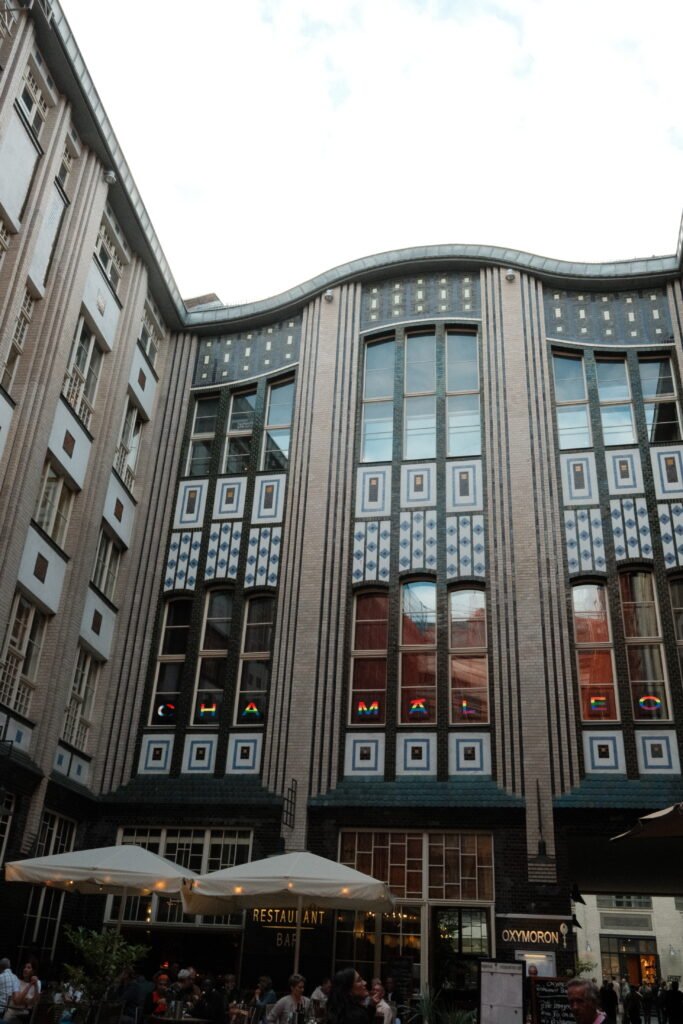
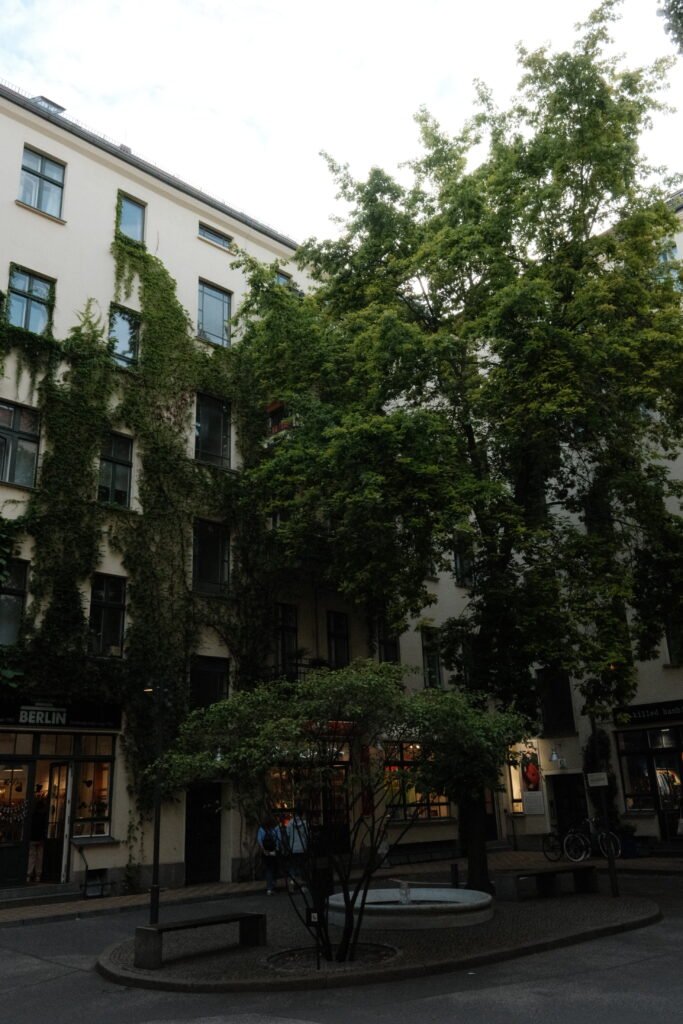
We finished the afternoon at Hackesche Höfe, a series of eight interconnected courtyards full of small shops, cafés, galleries and restaurants.
The complex was built in 1906 and is the largest enclosed courtyard complex in Germany. The first courtyard is particularly beautiful, with Art Nouveau façades and colourful tiles.
The area around Hackescher Markt also has an important Jewish history. A large Jewish community developed here from the 18th century onwards, and the nearby New Synagogue on Oranienburger Straße remains one of the most significant Jewish landmarks in Berlin.
Hackesche Höfe is a lovely area to wander around without a plan. We found a small market opposite and stopped for Nutella crêpes before heading back to the hostel.
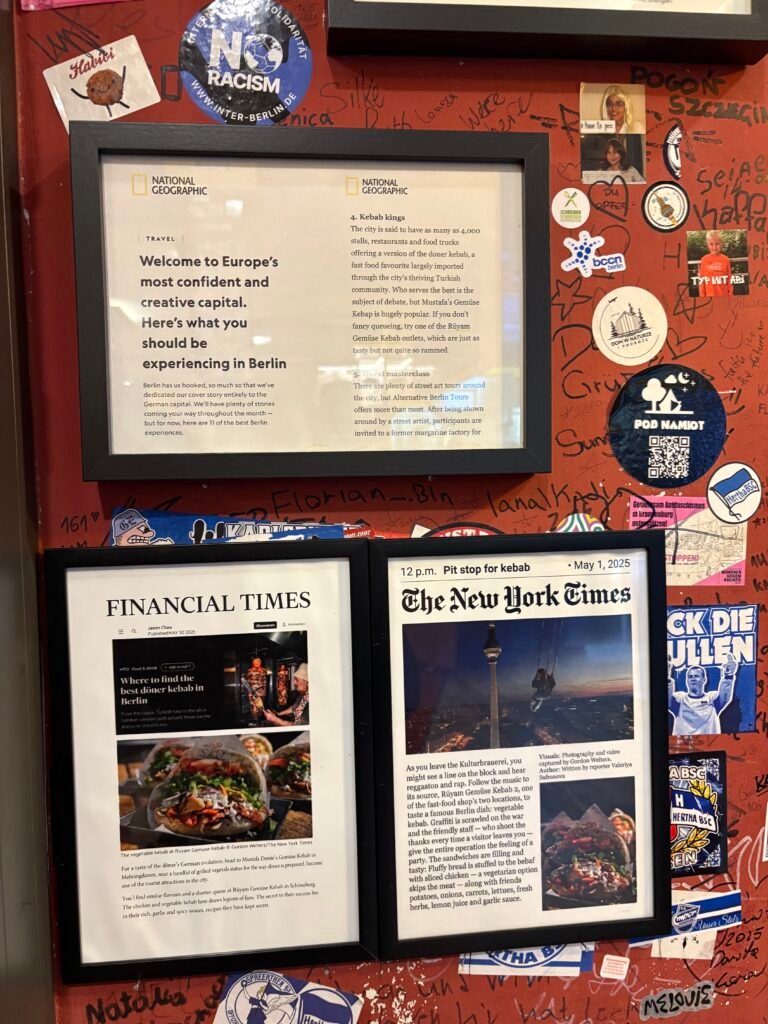
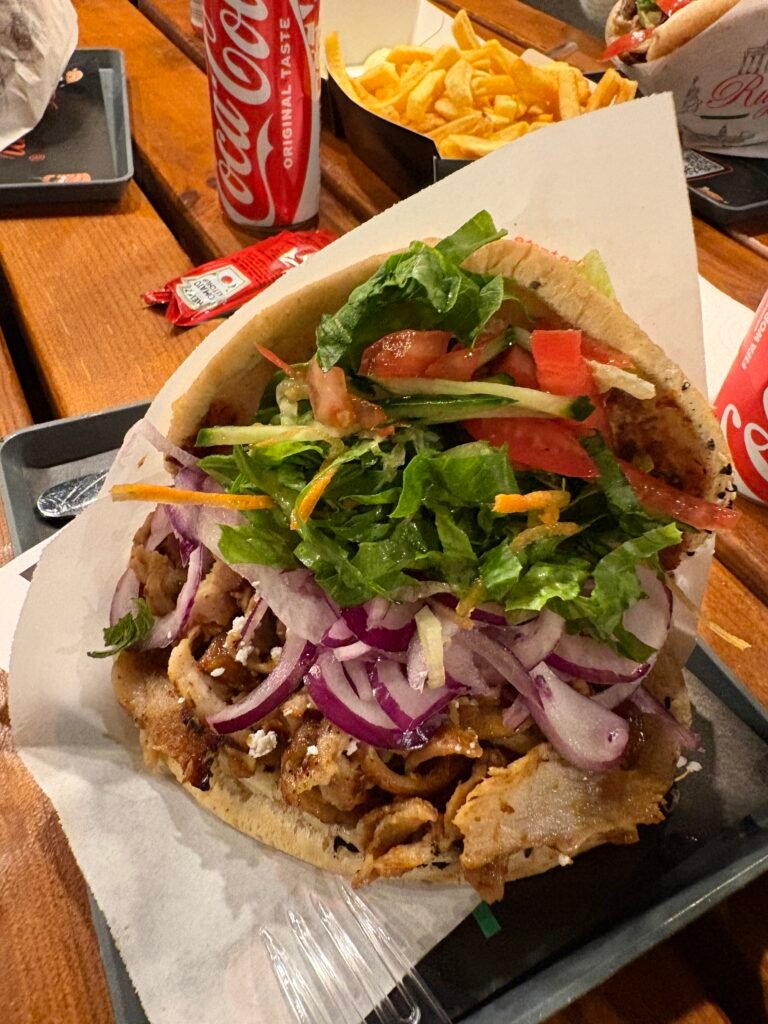
🥙 One Last Berlin Kebab at Rüyam
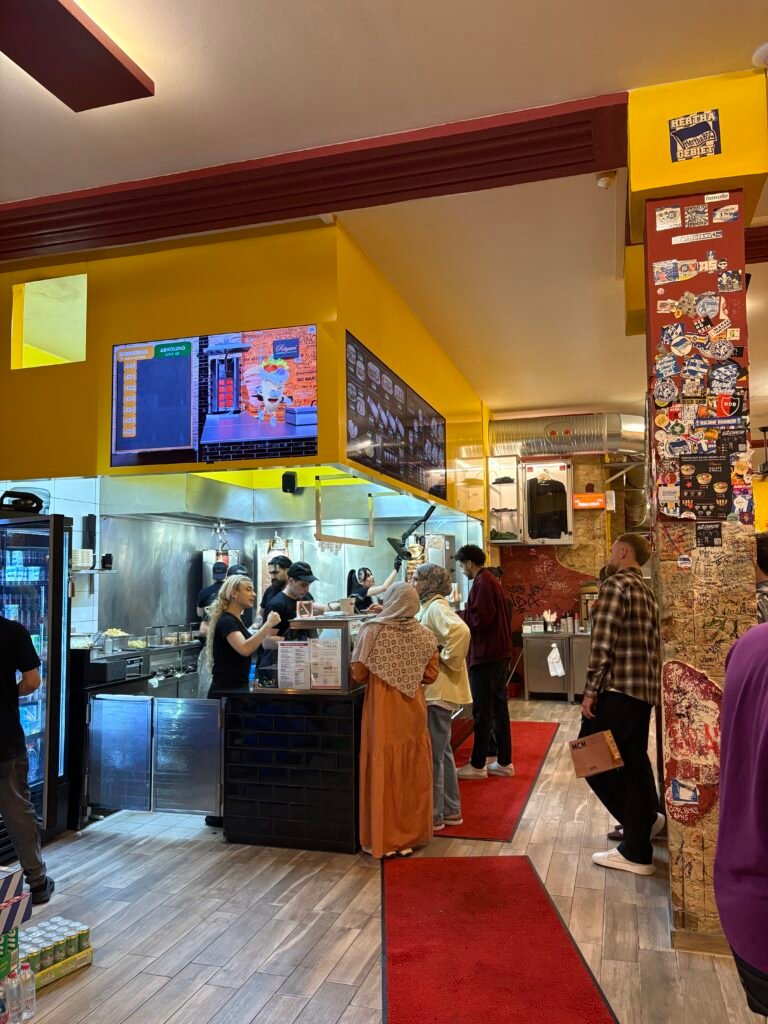
After an Uber back to the hostel, which cost €22 in total, we ended our final evening at Rüyam Gemüse Kebab.
It is one of Berlin’s most popular kebab spots, and after trying it ourselves, we understood why. We paid around €11.20 per person, and it was a very good final meal in the city.
After three days of museums, memorials and long walks, it felt like the right way to end the trip.
💭 Is Three Days Enough for Berlin?
If you have 3 days in Berlin, you can see the city’s main historical sights, spend time around the East Side Gallery and Museum Island, and still leave room to wander.
You can see many of the essential historical sites, walk part of the Wall, visit the Reichstag, explore Museum Island and still leave time for neighbourhoods such as Friedrichshain and Kreuzberg.
But Berlin is not a city you should try to tick off as quickly as possible. Some of the most important places require time to read, think and take in what you are seeing. We would rather see fewer museums properly than rush through everything just to say we had been there.
If you have more time, we would add an extra day for Potsdam — a nearby city known for Sanssouci Palace, grand Prussian palaces and gardens. You could also use the extra time for more museums, if that interests you, or for neighbourhoods such as Prenzlauer Berg and Neukölln, Berlin’s parks and its lakes.
Berlin is also famous for its nightlife. We did not experience that side of the city on this family trip, but if clubs, live music and bars are important to you, it would be worth staying an extra night and planning a slower morning afterwards.
💶 How Much Did We Spend?
Based on what we recorded, we spent around €180 per person, excluding flights, during our three days in Berlin.
This included accommodation, food, Ubers, museum entry and small expenses along the way.
Some of our biggest expenses were:
- 🏨 Accommodation: €71 per person for 3 nights
- 🚕 Ubers: around €30 per person
- 🍽️ Food: around €60 per person
- 🏛️ Neues Museum: €15 per person
We did not record every coffee, ice cream or small snack, so your total may be a little higher depending on where you eat, how often you use public transport or Ubers, and which museums you choose to visit.
For a capital city, we found Berlin fairly manageable on a budget — especially because many of its most important historical sites, memorials and museums can be visited for free.
✨ Our Worthwhile Verdict
Berlin was not always an easy city to visit.
Some places were heavy, some exhibitions were emotionally exhausting and the history can feel overwhelming. But that is also what made the trip memorable.
We loved the contrast between grand buildings and small details: the remains of Anhalter Bahnhof, an old photo booth, the Wall covered in murals, the quiet of the Holocaust Memorial, a tiny disco in a telephone booth and kebabs at the end of a long day.
Berlin is a city that asks you to pay attention.
Go with a plan, but do not overfill every hour. Leave time to walk, read the signs, sit down for coffee and let the city reveal itself slowly.